⚡ Residential Energy Storage Battery — Quick-Reference Snapshot
| Topic | Key Facts at a Glance |
|---|---|
| What it does | Stores electricity from solar panels or the grid for later use at home |
| Best chemistry | Lithium Iron Phosphate (LFP / LiFePO₄) — safest, longest life |
| Typical home capacity | 5 – 20 kWh per system (can stack multiple units) |
| Typical lifespan | 3,000 – 4,000 cycles ≈ 10 – 15 years of daily use |
| Global market (2024) | USD 1.96 billion → projected USD 5.60 billion by 2032 (~14% CAGR) |
| U.S. installs (2024) | Over 1,250 MW — 57% higher than 2023 |
| Top benefits | Backup power, lower electricity bills, solar self-consumption, energy independence |
| Key certifications to look for | CE, UL, IEC, RoHS, UN38.3, UKCA |
Now, let’s go deeper into each topic so you can make the smartest decision for your home.
1. What Is a Residential Energy Storage Battery and How Does It Work?
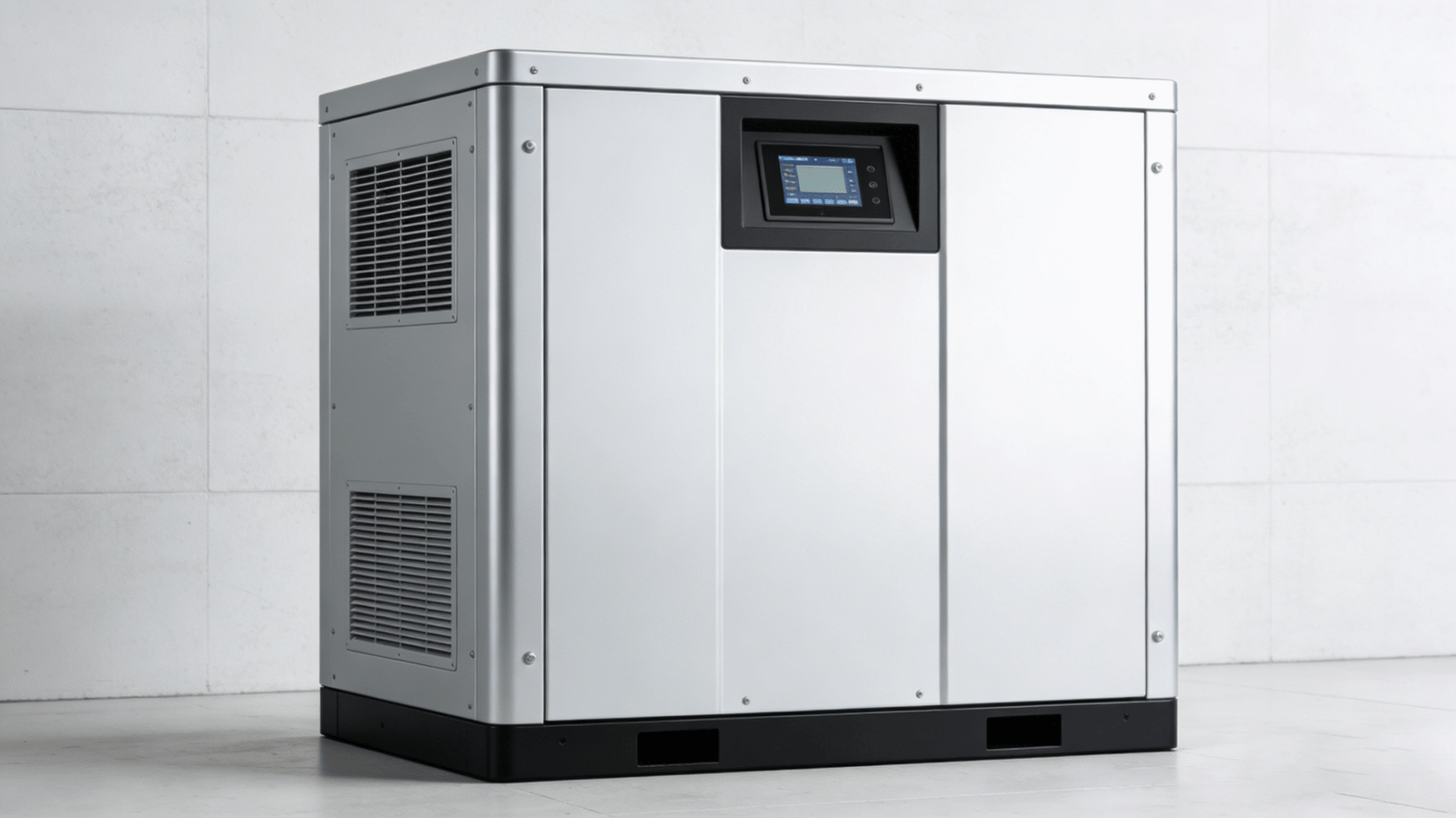
A residential energy storage battery is a rechargeable battery system installed at your home. It stores electricity so you can use it whenever you need it — even when the sun isn’t shining or the grid goes down.
Think of it like a giant, smart power bank — but for your entire house.
The 4 Key Components
Every home battery system has four main parts working together:
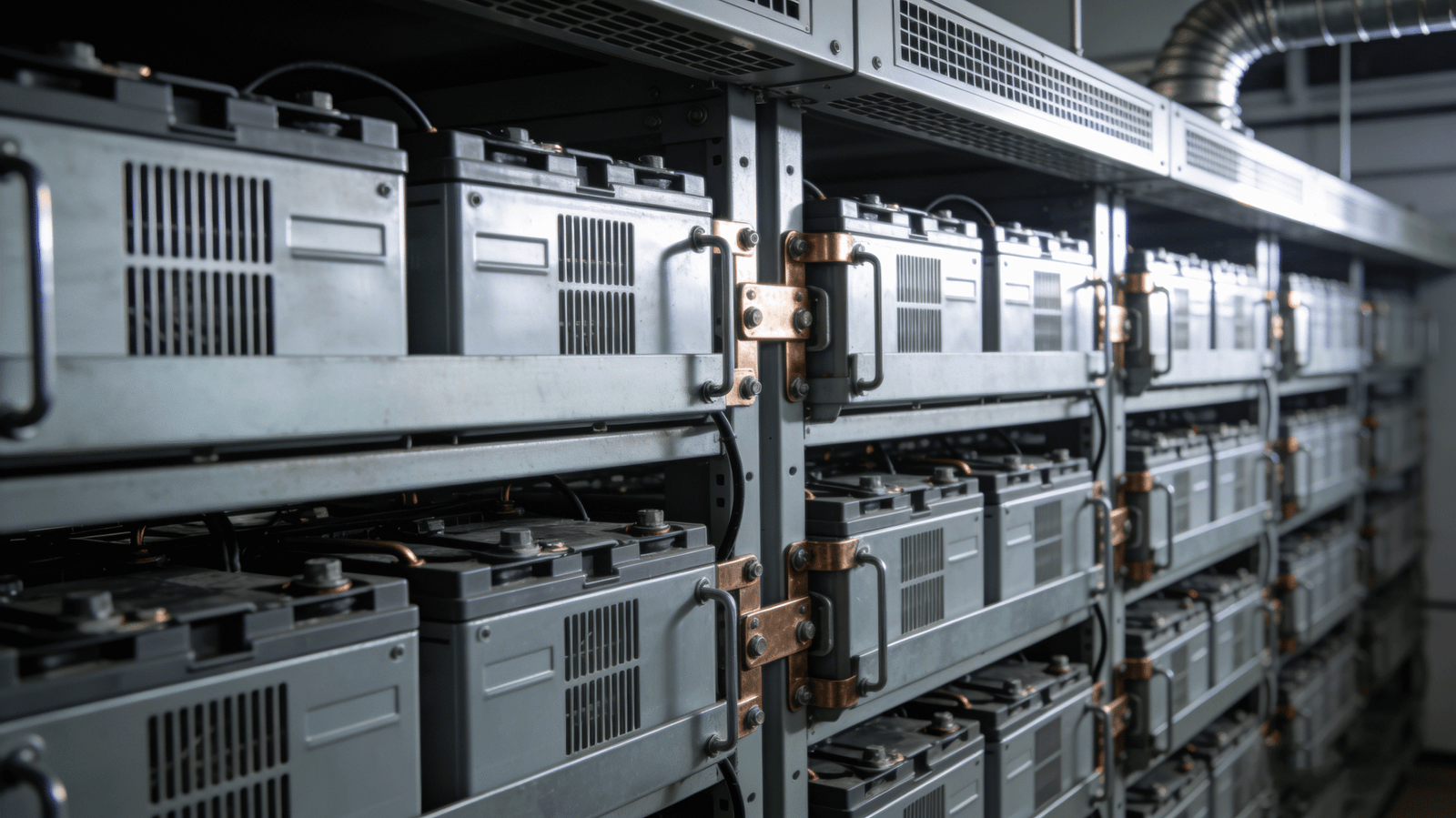
- Battery Pack — The heart of the system. It stores electrical energy in chemical form. Most modern home batteries use lithium-based cells for high energy density and long life.
- Battery Management System (BMS) — This is the brain. It constantly monitors voltage, temperature, and current. It protects the battery from overcharging and overheating.
- Inverter — Your home runs on AC electricity. Solar panels and batteries produce DC electricity. The inverter converts between the two, so everything works together.
- Energy Management System (EMS) — This is the software layer. It decides when to charge, when to discharge, and how to save you the most money.
How Does It Charge and Discharge?
Here is a simple breakdown of the process:
- Charging: Your solar panels or the grid send electricity to the battery during the day or when energy prices are low.
- Storing: The battery holds that energy safely until you need it.
- Discharging: In the evening, during a blackout, or when grid electricity is expensive, the battery releases power to your home.
That control translates directly into lower bills and greater peace of mind.
In short, a residential energy storage battery makes your home smarter, more resilient, and more energy-efficient — all at the same time.
2. Why Lithium Iron Phosphate (LFP) Is Now the #1 Choice for Home Batteries
Not all battery chemistries are the same. There are several types, but one clear winner has emerged for home use: Lithium Iron Phosphate, also written as LFP or LiFePO₄.
LFP batteries now hold roughly 60–70% of the global Battery Energy Storage System (BESS) market. That is a huge share, and for very good reasons.
LFP vs. Other Battery Types — Side-by-Side Comparison
| Feature | LFP (LiFePO₄) | NMC (Lithium Nickel Manganese Cobalt) | Lead-Acid |
|---|---|---|---|
| Cycle Life | 3,000 – 4,000+ cycles | 1,000 – 2,000 cycles | 300 – 700 cycles |
| Safety | Very High — thermally stable | Moderate — more heat-sensitive | Moderate — risk of acid leaks |
| Energy Density | Good (and improving) | High | Low |
| Cost per kWh | Low and dropping | Medium-High | Low upfront, high over time |
| Operating Temp Range | −20°C to 60°C | 0°C to 45°C | 15°C to 40°C (optimal) |
| Maintenance | None (sealed) | Minimal | Regular water top-up |
| Best for homes? | ✅ Yes — top choice | Possible but costlier | ❌ Outdated for most homes |
Why LFP Wins for Homeowners
- Thermal stability: LFP does not overheat easily. This makes it much safer to install indoors or in a garage.
- Long cycle life: You can charge and discharge it thousands of times without significant capacity loss.
- No capacity fade: LFP holds its charge well even after years of daily use.
- Cost-effective: The cost per usable kWh is lower than almost any other lithium option, and it keeps improving.
- Wide temperature range: LFP works in cold winters and hot summers — a major plus for homeowners in diverse climates.
LongKun Battery Group builds all of its residential energy storage system (ESS) packs using premium LFP cells from tier-1 brands. Furthermore, every pack includes a smart BMS for maximum protection and performance.
3. How Fast Is the Home Battery Market Growing?
The residential energy storage industry is growing at an incredible pace. Here is a look at the numbers:
| Region / Metric | 2024 Value | 2032 Forecast | CAGR | Key Driver |
|---|---|---|---|---|
| Global Market | USD 1.96 billion | USD 5.60 billion | ~14.08% | Solar adoption, rising electricity prices |
| U.S. Market | USD 0.49 billion | USD 1.36 billion | ~13.55% | Grid outages, solar-plus-storage boom |
| U.S. Installed Capacity | 1,250+ MW | — | +57% YoY vs 2023 | Federal incentives, consumer awareness |
These numbers tell a very clear story: residential energy storage is not a trend — it is a transformation.
Three big forces are driving this growth:
- Rising electricity prices — Homeowners want to escape expensive peak-hour utility rates.
- More frequent grid outages — Extreme weather events make backup power more important than ever.
- The solar-plus-storage boom — More homeowners are pairing solar panels with home batteries to become truly energy independent.
Analysts also estimate that the world may need about 1,300 GW of total battery capacity by 2030 to support global climate goals. Home batteries are an important piece of that puzzle.
4. Key Specs to Compare Before You Buy a Residential Energy Storage Battery
Shopping for a home battery can feel overwhelming. However, if you focus on these key specifications, the decision becomes much easier. Below is a clear comparison — including LongKun’s LFP residential battery specs as a real-world benchmark.
| Specification | What It Means | Industry Range | LongKun LFP Home Battery |
|---|---|---|---|
| Usable Capacity (kWh) | How much energy the battery can deliver | 5 – 20 kWh per unit | Customizable — modular stacking available |
| Power Rating (kW) | How fast it can deliver energy | 3 – 10 kW continuous | Custom to match home load requirements |
| Cycle Life | How many full charge-discharge cycles before capacity drops below 80% | 2,000 – 4,000 cycles | 3,000 – 4,000+ cycles (LFP) |
| Round-Trip Efficiency | Percentage of stored energy you actually get back | 85% – 95% | >95% (smart BMS optimized) |
| Operating Temperature | Temperature range the battery works safely in | 0°C to 45°C (most brands) | −20°C to 60°C (wide range LFP) |
| Warranty | Manufacturer guarantee period | 5 – 10 years | Flexible — discuss with our team |
| Certifications | Safety and quality standards met | Varies widely | CE, UL, IEC, RoHS, UN38.3, UKCA |
5. How Much Battery Storage Capacity Does a Typical Home Actually Need?
One of the most common questions homeowners ask is: “How big of a battery do I need?” The honest answer is: it depends. But here is an easy framework to figure it out.
Simple Sizing Rule of Thumb
- Find your daily energy use — Check your electricity bill for your average daily kWh consumption. Most U.S. homes use between 20 and 35 kWh per day.
- Decide what you want to cover — Do you want full backup for everything? Or just essential loads (lights, fridge, Wi-Fi, phone charging)? Essential-only backup typically needs just 5–10 kWh.
- Factor in your solar system — If you have solar panels, your battery mainly needs to cover your evening and overnight usage, not the full day.
- Think about backup time — How long do outages typically last in your area? A few hours? Or could they last a day or two?
Home Type vs. Recommended Battery Capacity
| Home / Use Case | Typical Daily Use | Recommended Capacity | Best For |
|---|---|---|---|
| Small apartment / 1–2 person home | 10 – 15 kWh/day | 5 – 7 kWh | Essential backup, TOU bill savings |
| Average family home (3–4 people) | 20 – 30 kWh/day | 10 – 15 kWh | Solar self-consumption + overnight coverage |
| Large home / heavy energy user | 30 – 50 kWh/day | 15 – 20 kWh (or stacked) | Full home backup, EV charging, solar + storage |
| Off-grid or near off-grid home | Varies | 20 kWh+ (multi-unit stack) | Full energy independence |
The good news is that modern residential battery systems are modular. That means you can start with one unit and add more later as your energy needs grow. LongKun’s residential battery packs are designed with exactly this flexibility in mind.
6. What Does a Residential Energy Storage Battery Cost — and What Savings Can It Bring?
Cost is often the first question on a homeowner’s mind. Let’s break it down clearly — both what you pay and what you get back.
What Drives the Cost?
- Battery chemistry and capacity (kWh) — Larger and better-quality cells cost more upfront but save more over time.
- Inverter type — DC-coupled systems tend to be more efficient; AC-coupled systems are easier to retrofit.
- Installation and local codes — Labor, permits, and electrical upgrades vary significantly by region.
- Brand and certifications — Certified, well-warranted systems cost more but reduce risk dramatically.
How Can a Home Battery Save You Money?
There are four main ways a residential energy storage battery puts money back in your pocket:
- Peak shaving (Time-of-Use savings) — Utilities charge more during peak hours (usually evenings). Your battery charges when electricity is cheap and discharges when it is expensive. This is called peak shaving, and it can cut your electricity bill significantly every month.
- Solar self-consumption — Instead of selling excess solar energy back to the grid at low feed-in rates, you store it and use it yourself — when it is worth more to you.
- Backup power savings — A single extended outage can mean lost food, lost work, or a hotel stay. A home battery prevents those hidden costs.
- Virtual Power Plant (VPP) revenues — In some regions, you can earn money by letting your utility access your stored energy during grid stress events.
Government Incentives That Reduce Your Upfront Cost
Many regions actively support residential storage adoption through financial incentives. These programs significantly improve your payback period:
- 🇺🇸 United States: The federal Investment Tax Credit (ITC) covers a percentage of battery + solar installation costs. Many states add their own rebates on top.
- 🇦🇺 Australia: State-based rebate programs (such as the Virtual Power Plant schemes in South Australia) make home batteries highly cost-effective.
- 🇪🇺 Europe: Multiple EU countries offer grants and low-interest loans for home energy storage as part of their clean energy transition goals.
- 🇯🇵 Japan: Government subsidies for residential storage systems have been available for several years to support grid resilience.
7. Solar Panels, EV Charging, and Smart Home — How They All Work Together
A residential energy storage battery works best when it is part of a connected home energy ecosystem. Today, the most powerful setup combines solar panels, a home battery, an EV charger, and a smart Energy Management System (EMS).
Solar + Storage: The Fastest-Growing Combination
Solar-plus-storage is the number-one driver of residential battery demand worldwide. Here is why it is so powerful:
- Use 100% of your solar energy — Any excess solar power goes into the battery instead of being exported to the grid at a low rate.
- Power your home at night — The sun sets, but your stored solar energy keeps the lights on.
- Full backup in outages — When the grid goes down, solar keeps charging your battery during the day, so you stay powered indefinitely.
DC-Coupled vs. AC-Coupled — Which Is Better?
| Feature | DC-Coupled | AC-Coupled |
|---|---|---|
| How it connects | Direct to solar DC side | Connects on the AC side |
| Efficiency | Higher (fewer conversions) | Slightly lower |
| Best for | New solar + storage installations | Retrofitting an existing solar system |
| Installation | More complex setup | Easier to add to existing systems |
EV Charging Integration
If you own an electric vehicle, your home battery becomes even more valuable. Your EMS can automatically charge your EV from stored solar energy during the day — at almost zero cost per mile. Additionally, smart scheduling prevents your EV from drawing from the grid during expensive peak hours.
Smart Home Energy Management
Modern home batteries connect to smart home platforms. They can respond to real-time electricity prices, weather forecasts, and your daily routines. As a result, the system automatically optimizes when to charge, when to discharge, and when to draw from the grid — without you lifting a finger.
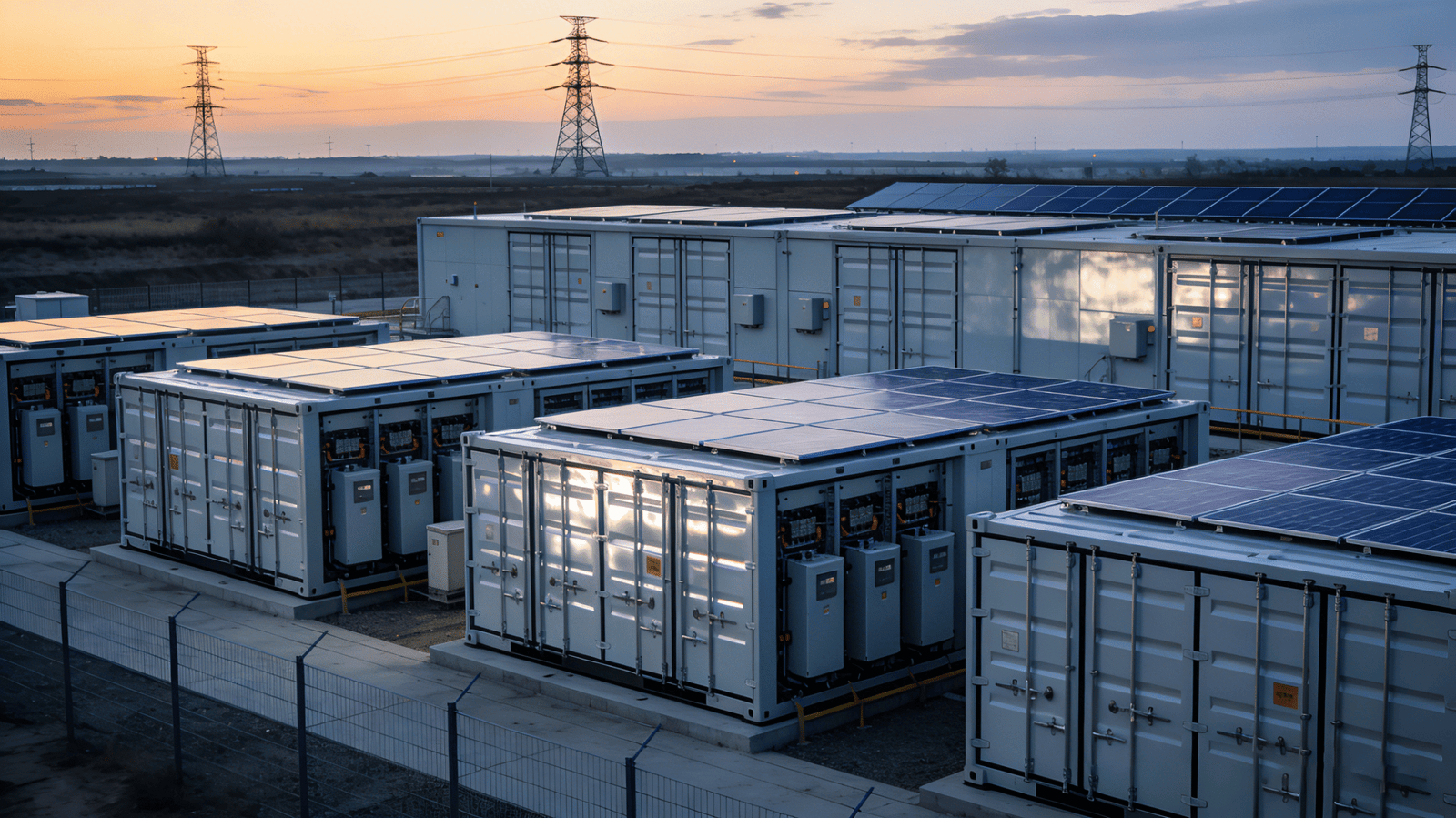
For large-scale or commercial energy storage installations that go beyond the home, explore LongKun’s Battery Storage Power Plant solutions — built with the same premium LFP technology scaled to industrial needs.
8. How Long Will Your Residential Energy Storage Battery Last?
Lifespan is one of the most important factors when comparing home batteries. After all, you want your investment to last.
Lifespan in Numbers
| Battery Type | Cycle Life | Approx. Years (daily use) | Capacity at End of Life |
|---|---|---|---|
| LFP (LongKun grade) | 3,000 – 4,000 cycles | 10 – 15 years | ≥80% of original capacity |
| Standard NMC lithium-ion | 1,000 – 2,000 cycles | 5 – 8 years | ~80% of original capacity |
| Lead-Acid (AGM) | 300 – 700 cycles | 2 – 5 years | Rapid decline after mid-life |
What Affects How Long Your Battery Lasts?
Even the best battery will degrade faster if it is not used properly. Here are the main factors that determine real-world lifespan:
- Depth of Discharge (DoD) — Discharging to 80% rather than 100% every cycle significantly extends battery life. Quality systems automatically manage this.
- Operating temperature — Extreme heat accelerates chemical degradation. LFP batteries have a wider safe temperature range, making them more durable in hot climates.
- Cycling frequency — Daily cycling wears a battery faster than occasional backup use. However, with 3,000+ cycles, daily use for over 10 years is still very achievable with LFP.
- BMS quality — A smart, high-quality BMS actively protects the battery from conditions that cause early aging. This is why LongKun includes a premium BMS in every pack.
9. Why Choose LongKun for Your Residential Energy Storage Battery?
There are many battery manufacturers out there. So why do more than 1,500 clients across Europe, the USA, Australia, and Japan trust LongKun Battery Group?
Who Is LongKun Battery Group?
LongKun Battery Group (clkbattery.com) was established in Shenzhen, China in 2009. We are a professional one-stop custom battery pack manufacturer. Our services cover everything from Battery Structure Design and Cell Manufacturing to BMS Solutions, Battery Pack Assembly, and Battery Charger Development.
What Sets LongKun Apart?
- 🏭 5 fully automated production lines built to Industry 4.0 standards
- 👷 50+ experienced engineers — including former engineers from BYD and CATL, two of the world’s top battery companies
- 🔬 Tier-1 brand cells — We only use premium cells for maximum safety and performance
- 🌡️ Wide-temperature expertise — Specialists in High Voltage, High/Low Temperature, and Explosion-Proof battery solutions
- 📦 50 million+ units annually from a 1,000-person skilled workforce
- ✅ Fully certified: UN38.3, MSDS, IEC, CE, UKCA, RoHS, UL
- 🌱 Green manufacturing — Strict adherence to international environmental standards throughout production
Real-World Case Studies
🏥 Medical Equipment
A leading medical device maker needed a battery for portable X-ray machines. LongKun designed a lightweight, high-capacity pack with extended runtime and fast charging — making their equipment far more mobile and efficient.
🛰️ Aerospace Project
An aerospace company selected LongKun to build a specialized battery for satellite systems. Our engineers created a pack that withstands extreme temperatures and radiation in the harsh conditions of space.
🏢 Commercial Data Center Backup
A multinational corporation needed reliable battery backup for their data centers. LongKun supplied high-capacity, long-lasting packs that kept critical systems running safely during power outages.
📡 Telecom Base Stations
A major telecom company needed reliable power for base stations in harsh environments. LongKun delivered high-energy-density packs with excellent environmental resistance — greatly reducing the risk of communication interruptions.
⛳ Golf Carts
Through professional custom battery solutions, LongKun successfully met the demanding requirements of a major golf cart manufacturer — earning high recognition for our technical capability and reliability.
LongKun offers full customization — from cell selection and BMS programming to pack design and certification support. Our team handles everything from inquiry to after-sale service, so your purchasing process is smooth and efficient.
To learn more about utility-scale and commercial storage solutions from LongKun, visit our Battery Storage Power Plant page. For smart energy cost management, also explore our Peak Shaving Battery System solutions.
10. Frequently Asked Questions About Residential Energy Storage Batteries
Here are the most common questions homeowners ask — answered simply and clearly.
What is a residential energy storage battery used for?
A residential energy storage battery stores electricity from your solar panels or the grid. Then, it releases that energy when you need it — during the evening, during a power outage, or when electricity prices are high. It helps you lower your electricity bills, increase your solar self-consumption, and keep your home powered even when the grid goes down.
How big of a battery do I need for my home?
Most homes use systems in the 5–20 kWh range. The right size depends on your daily electricity consumption, how long you want to run on battery power during an outage, and whether you have solar panels. A simple starting point: find your average daily kWh use on your electricity bill, then decide what fraction you want to cover with battery storage. Your installer can help fine-tune the sizing.
How long do home energy storage batteries last?
Modern LFP home batteries typically last about 3,000–4,000 full charge-discharge cycles. At one cycle per day, that equals roughly 10–15 years of daily use. Lifespan depends on depth of discharge, temperature, and cycling frequency. Good system design — including a quality BMS and proper temperature management — helps maximize battery life.
Are residential energy storage batteries safe?
Yes — especially LFP batteries, which are widely considered one of the safest lithium-ion chemistries available. LFP is thermally stable and highly resistant to overheating. Safety also depends on a quality BMS, certified products, and professional installation that follows local electrical codes. LongKun batteries hold CE, UL, IEC, and UN38.3 certifications for confirmed safety.
How much money can a home battery save?
Savings come from using stored energy during peak pricing periods, increasing your solar self-consumption, and avoiding outage-related costs like food spoilage or lost work. The exact amount depends on your local electricity tariffs and system design. Homeowners on time-of-use tariffs can often shift a large portion of their expensive evening usage to cheaper stored energy — producing meaningful monthly savings.
What incentives are available for residential energy storage?
Many regions offer tax credits, rebates, or low-interest financing for home battery systems — especially when paired with solar. In the U.S., the federal Residential Clean Energy Credit covers a percentage of installation costs. Australia, Europe, and Japan all have their own incentive programs. Check with your local utility or government energy office for the latest offerings in your area.
What is the difference between AC-coupled and DC-coupled home batteries?
A DC-coupled system connects directly to the DC side of your solar array. It is more efficient because energy undergoes fewer conversions. It works best in new solar + storage installations. An AC-coupled system connects on the AC side and is easier to retrofit onto an existing solar setup, but involves slightly more energy conversion. Both systems work well — the best choice depends on your specific setup.
Why are LFP batteries popular for home energy storage?
LFP batteries offer the best combination of long cycle life (3,000–4,000+ cycles), strong safety characteristics, wide operating temperature range, and competitive cost per kWh. That is why they have captured an estimated 60–70% of the global BESS market. They are the top choice for residential, commercial, and utility-scale storage alike — and the technology continues to improve.
Can a residential battery run my whole house?
A correctly sized system can support an entire home for a limited period. However, many installations focus on backing up critical loads — lights, refrigerator, Wi-Fi, phone charging, and medical devices. Running high-power appliances like electric heating or EV charging for extended periods requires a larger or multi-unit battery system. Talk to your installer about whole-home vs. critical-load backup to find the right balance.
How is the global residential energy storage landscape evolving?
Residential storage is accelerating strongly worldwide, especially in North America and Asia-Pacific. Rising electricity prices, more frequent grid outages, and the solar-plus-storage boom are all driving adoption. Analysts estimate the global residential storage market will grow from USD 1.96 billion in 2024 to USD 5.60 billion by 2032 — a 14% annual growth rate. The future of home energy is increasingly battery-powered.
Conclusion: Is a Residential Energy Storage Battery Right for You?
The answer, for most homeowners, is a clear yes. A residential energy storage battery offers real, measurable benefits:
- ✅ Lower electricity bills through peak shaving and solar self-consumption
- ✅ Reliable backup power when the grid goes down
- ✅ Greater energy independence from utility price volatility
- ✅ A smarter, greener home that actively supports a clean energy future
- ✅ Long-term value — especially with LFP technology lasting 10–15 years
The market is growing fast. Incentives are available now. And the technology — especially LFP-based systems — has never been more reliable, safe, or affordable.
However, not all batteries are equal. The difference between a mediocre system and a great one comes down to cell quality, BMS intelligence, certifications, and manufacturer expertise. That is exactly where LongKun Battery Group stands out.
With over 15 years of experience, 50+ expert engineers, 5 fully automated production lines, and more than 1,500 satisfied clients worldwide, LongKun delivers residential energy storage batteries you can trust for decades.
Ready to Power Your Home with a Custom LFP Energy Storage Battery?
Get in touch with the LongKun team today. We offer free consultation, custom sizing guidance, and end-to-end support — from design to after-sale service.