Are you trying to cut your factory’s energy bills? Or maybe you want to keep your operations running smoothly when the power grid goes down? Either way, an industrial energy storage system could be exactly what your business needs. In this complete guide, we break everything down in simple, clear terms — what it is, how it works, why it matters right now, and how to choose the right solution for your specific needs.
⚡ Key Takeaways — Industrial Energy Storage at a Glance
| Topic | Fast Answer |
|---|---|
| What it is | A large-scale system that stores electricity and releases it when factories, data centers, or utilities need it most |
| How it works | Charge (off-peak) → Store (in batteries) → Discharge (on demand or during outages) |
| Best technology 2026 | LiFePO₄ (LFP) lithium-ion — highest safety, longest life (5,000–6,000+ cycles) |
| Top benefits | Lower energy bills, backup power, fewer outages, more renewable energy use |
| Market size 2024 | ~$266.8 billion USD; forecast ~$569.4 billion by 2034 |
| New BESS installs 2023 | 74 GWh globally — nearly 3× the 2022 figure of 27 GWh |
| Trusted supplier | LongKun Battery Group — custom LiFePO₄ packs, 15+ yrs experience, UN38.3 / CE / UL certified |
📋 Table of Contents
- What Is an Industrial Energy Storage System (IESS)?
- Why Industrial Energy Storage Matters in 2026
- Market Size and Growth of Industrial Energy Storage
- Key Industrial Applications and Use Cases
- Main Technologies for Industrial Energy Storage
- How Industrial Energy Storage Systems Work
- Benefits for Industrial and Commercial Users
- Global and Regional Trends (China, Asia-Pacific, EU, US)
- Technical Features to Look For in Industrial BESS
- How to Size an Industrial Energy Storage System
- Real-World Industrial Energy Storage Case Studies
- How LongKun (clkbattery.com) Fits into Industrial Energy Storage
- Future Trends: Larger Packs, Longer Life, Intelligence
- Frequently Asked Questions
- Conclusion & Get a Free Quote
1. What Is an Industrial Energy Storage System (IESS)?
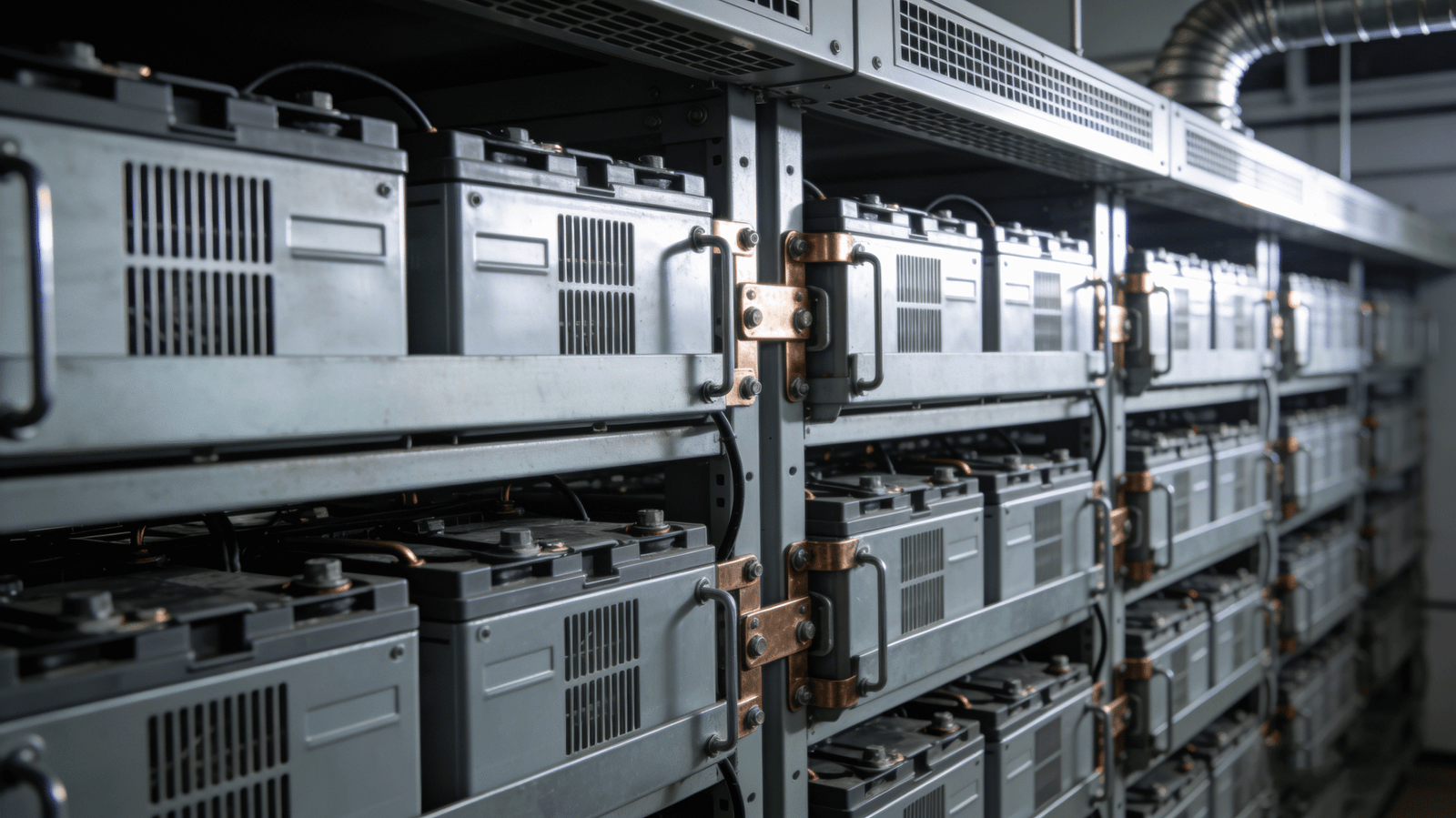
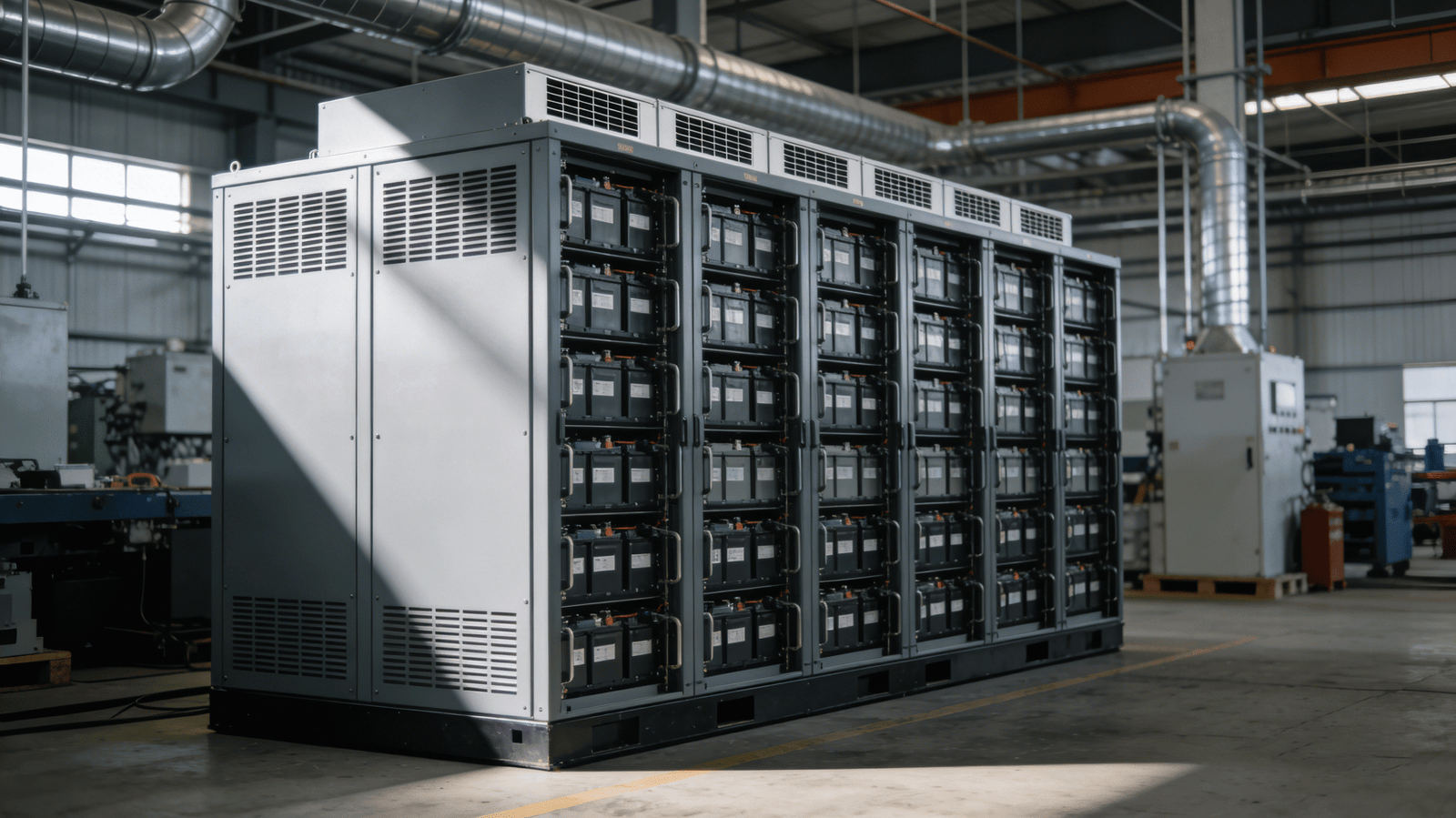
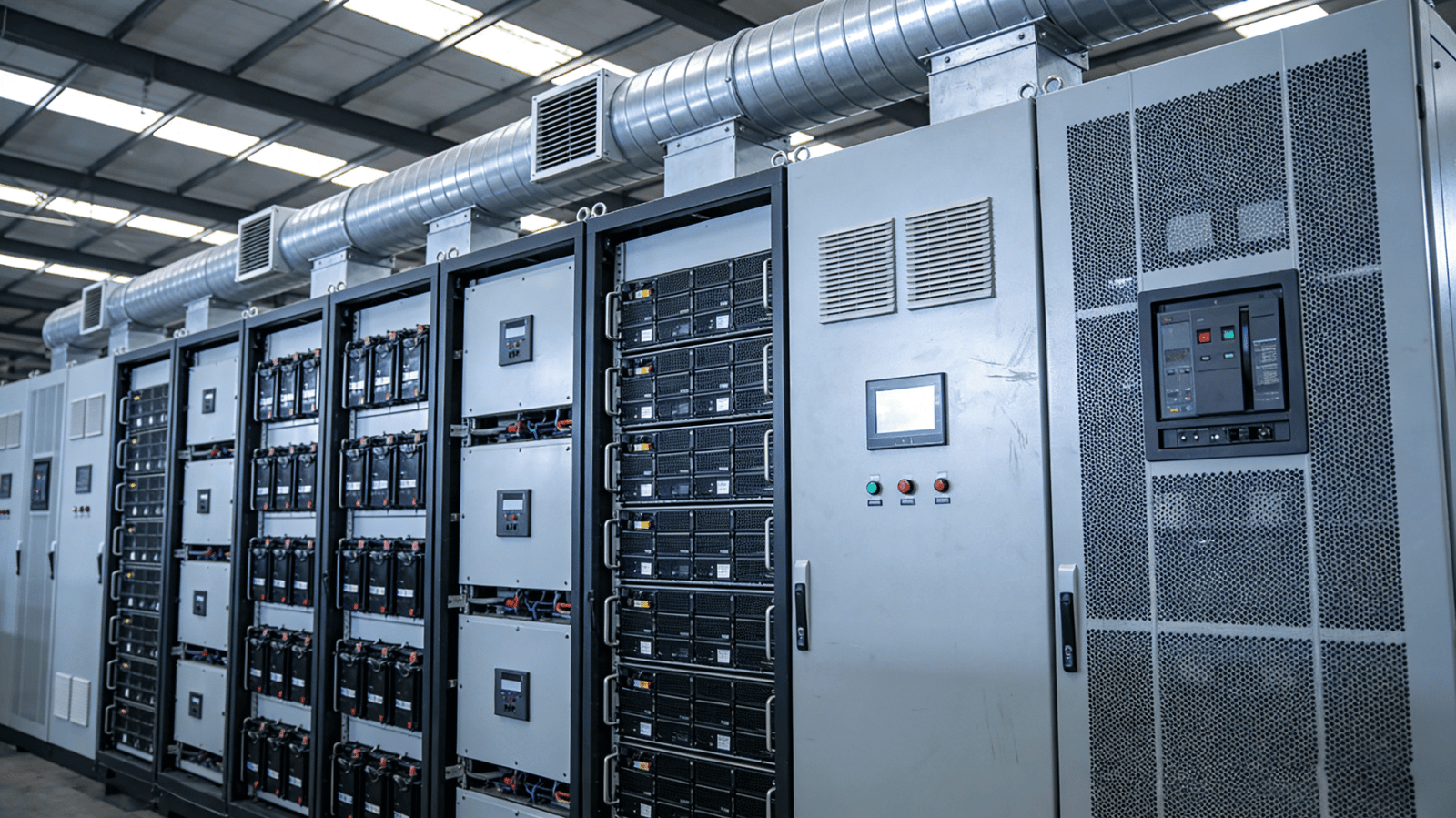
An industrial energy storage system is a large-scale solution that stores electrical energy for later use in factories, industrial parks, data centers, utilities, and commercial buildings. Think of it as a giant rechargeable battery — but instead of powering a smartphone, it powers an entire manufacturing floor or industrial zone.
According to energy industry sources, a complete IESS typically includes battery packs or other storage technology plus control systems, thermal management, and monitoring software. Together, these components store excess or off-peak power and release it precisely when demand is high or when the grid goes down.
The 3 Phases: Charging, Storage, and Discharging
- Charging phase: The system absorbs electricity from the grid or from renewable sources (like solar panels or wind turbines) during off-peak hours when electricity tariffs are at their lowest.
- Storage phase: That energy is safely held inside battery packs — typically lithium iron phosphate (LFP) cells — until it is needed by the facility.
- Discharging phase: When demand spikes or the grid fails, the system releases stored energy instantly. This keeps operations running without interruption.
A Battery Management System (BMS) and an Energy Management System (EMS) oversee the entire process. They optimize charging cycles, monitor cell health in real time, and protect the system from overcharge, overheating, and short circuits.
“An industrial energy storage system is the brain and muscle of modern industrial power management. It stores energy smartly and releases it strategically — reducing costs and keeping operations reliable.”
2. Why Industrial Energy Storage Matters in 2026
Today, businesses face several serious energy challenges all at once. Power outages are more costly than ever before. Energy prices fluctuate unpredictably with the time of day and season. Furthermore, companies face growing regulatory and investor pressure to cut carbon emissions and adopt cleaner energy sources.
As a result, industrial energy storage systems have moved from “nice to have” to a strategic necessity for competitive businesses.
Four Big Reasons Storage Matters Right Now
- Grid stability: Industrial operations need steady, reliable power. Storage systems smooth out grid fluctuations, protecting sensitive equipment and production lines.
- Renewable energy integration: Solar and wind energy don’t always match when factories need power most. Storage bridges that gap — capturing surplus renewable energy and delivering it exactly when needed.
- Peak demand shaving: Utilities charge premium rates during high-demand periods. Consequently, charging storage systems at night (when rates are low) and discharging during the day (when rates are high) can produce major cost savings.
- Carbon reduction and sustainability goals: Using stored clean energy instead of diesel generators or high-carbon grid power cuts emissions — helping businesses meet ESG targets and government carbon mandates.
3. Market Size and Growth of Industrial Energy Storage
The numbers speak for themselves. The industrial and commercial energy storage market is growing at a remarkable pace, driven by falling battery costs, expanding renewable energy deployment, and supportive government policies worldwide.
| Metric | Value | Year |
|---|---|---|
| Global energy storage systems market size | ~$266.8 billion USD | 2024 |
| Forecast global market size | ~$569.4 billion USD | 2034 |
| Market CAGR | ~7.87% per year | 2025–2034 |
| New BESS installations worldwide | 27 GWh | 2022 |
| New BESS installations worldwide | 74 GWh (nearly 3× growth) | 2023 |
| Expected annual new BESS installations | >400 GWh per year | 2030 |
| New global BESS capacity additions | ~40 GW | 2023 |
| Share of growth: utility-scale systems | ~65% | 2023 |
| Share of growth: behind-the-meter | ~35% | 2023 |
| Share held by China, EU & US combined | ~90% of new capacity | 2023 |
Sources: Precedence Research, Statista, S&P Global / IEA
In 2023 alone, new battery energy storage system installations reached 74 GWh globally — nearly triple the 2022 figure. By 2030, analysts expect that number to exceed 400 GWh every single year. These figures make it very clear: industrial energy storage is one of the fastest-growing sectors in clean energy.
4. Key Industrial Applications and Use Cases
Industrial energy storage systems aren’t one-size-fits-all. They serve a wide variety of industries and purposes. Here’s a clear breakdown of the most important use cases today:
| Industry / Use Case | Primary Purpose | Key Benefit |
|---|---|---|
| Manufacturing plants | Stabilize power supply, peak demand shaving | Lower demand charges, fewer production interruptions |
| Data centers | UPS backup and extended runtime during outages | Protect critical IT systems, prevent data loss |
| Industrial parks / zones | Peak load shifting, grid balancing | Smoother utility loads, avoid energy curtailment |
| Mining / remote operations | Replace or hybridize diesel generators | Significant fuel savings, lower emissions |
| Commercial buildings | Time-of-use (TOU) optimization, demand response | Reduced energy bills, potential grid service revenue |
| Telecom base stations | Stable backup power for continuous transmission | Zero communication interruptions, long-term reliability |
| AGV / AMR robot fleets | Reliable mobile power for autonomous vehicles | Continuous warehouse or factory operations |
| Utilities and grid operators | Frequency regulation, voltage support | Grid stability, renewable energy integration at scale |
Real-World Example: Wuxi Industrial Zone, China (20 MW / 160 MWh)
One of the most compelling real-world examples of industrial energy storage in action is a 20 MW / 160 MWh installation in Wuxi, China. This system supports an industrial zone with approximately 50,000 workers. Furthermore, it uses time-shift storage and peak load balancing to dramatically improve energy efficiency across the entire zone. This project clearly demonstrates how large-scale industrial storage can transform power management for a major industrial area.
5. Main Technologies for Industrial Energy Storage
Not every industrial energy storage system uses the same technology. In fact, several different technologies are available today, and each one suits a different need. Here is a clear comparison to help you understand your options:
| Technology | Typical Use in Industry | Pros | Cons |
|---|---|---|---|
| Li-ion / LFP batteries | Most new BESS projects in 2026 | High efficiency, long cycle life, high energy density | Requires robust BMS and thermal management |
| Lead-carbon batteries | Large legacy projects (e.g., Wuxi 20 MW / 160 MWh) | Lower upfront cost, proven and reliable technology | Lower energy density, heavier weight |
| Supercapacitors | Power quality, very fast-response applications | Extremely high power output, very long cycle life | Low energy storage capacity |
| Compressed air / mechanical | Large-scale grid or industrial storage | Long-duration storage, low variable cost at scale | Very high project CAPEX, highly site-dependent |
| Fuel cells / hydrogen | Long-duration backup power | Very long runtime potential | High infrastructure and hydrogen fuel costs |
| Thermal energy storage | Industrial process heat / cooling | Low cost for thermal applications | Limited to thermal use cases |
For most industrial users in 2026, LFP (lithium iron phosphate) batteries clearly dominate new deployments. They strike the best balance between safety, cycle life, energy density, and total cost of ownership. Lead-carbon batteries are still used in some large legacy projects, while supercapacitors complement lithium systems where ultra-fast response is needed.
6. How Industrial Energy Storage Systems Work
Understanding how an industrial energy storage system works helps you make a much smarter buying decision. Let’s break it down step by step.
Step 1 — Charging from Grid or Renewables
The system charges during off-peak periods (typically overnight) when electricity tariffs are lowest. Alternatively, if your facility has solar panels or wind turbines, the storage system absorbs surplus renewable energy during the day — energy that would otherwise be wasted or sold back to the grid at low prices.
Step 2 — Storing Energy Safely
Energy is stored in battery cells — most commonly LFP lithium-ion chemistry. The Battery Management System (BMS) continuously monitors every cell’s voltage, temperature, and state of charge. As a result, it keeps cells balanced and protected from damage at all times.
Step 3 — Discharging During Peak or Outage Events
When electricity demand (and price) peaks, or when the grid experiences an outage, the system discharges automatically. Consequently, your facility continues operating normally — with no interruption to production or services.
The Role of EMS, BMS, Thermal Management, and Safety Systems
- EMS (Energy Management System): The “brain” of the whole setup. It uses real-time data, forecasts, and algorithms to decide exactly when to charge and discharge for maximum financial benefit.
- BMS (Battery Management System): Monitors individual cell health, balances charge across the pack, and prevents dangerous conditions like overheating or overcharging.
- Thermal management system: Keeps battery cells within their optimal temperature range — especially critical in harsh industrial environments.
- Safety & monitoring systems: Include fire detection, gas sensors, remote monitoring, and automatic shutdown features to protect both the equipment and personnel.
7. Benefits for Industrial and Commercial Users
So why should your business invest in an industrial energy storage system? Here are the five most important benefits — explained clearly:
✅ 1. Peak Shaving and Energy Bill Reduction
By charging when tariffs are low and discharging when tariffs are high, industrial users can significantly cut their monthly energy bills. This strategy — called time-of-use (TOU) optimization — directly reduces both energy consumption charges and demand charges on utility bills.
✅ 2. Reliable Backup Power During Outages
Power outages can cost industrial facilities enormous amounts in lost production, wasted materials, and equipment damage. Therefore, having a well-designed backup energy storage system means your operations keep running even when the grid fails. This is particularly critical for data centers, pharmaceutical manufacturing, food processing, and semiconductor fabrication.
✅ 3. Improved Power Quality
Voltage sags, surges, and frequency fluctuations can damage sensitive industrial equipment and disrupt automated production lines. In contrast, energy storage systems smooth out these power quality issues — protecting machines, reducing maintenance costs, and improving product consistency.
✅ 4. Higher Renewable Energy Penetration
If your facility generates solar or wind energy on-site, an industrial storage system lets you store surplus clean energy instead of wasting it. Furthermore, you can use that stored energy later — significantly reducing reliance on fossil fuels, cutting carbon emissions, and supporting your company’s sustainability targets.
For example, LongKun’s battery packs are widely used in solar energy storage applications for manufacturing facilities. If your business also operates drones or autonomous equipment powered by renewable energy, you might also find LongKun’s drone lithium battery solutions highly relevant — another area where advanced energy storage is transforming industrial operations.
✅ 5. New Revenue from Grid Services
In many regions, industrial operators with storage systems can earn money by providing ancillary grid services — such as frequency regulation, spinning reserve, and demand response programs. As a result, your storage system transitions from a pure cost item to a genuine income-generating asset.
8. Global and Regional Trends (China, Asia-Pacific, EU, US)
The industrial energy storage boom isn’t happening equally around the world. Here is where the biggest growth is occurring right now:
China — The Global Leader
China is the undisputed leader in industrial energy storage. The country accounts for over 50% of global lithium-ion battery production, and its BESS capacity additions tripled to 23 GW in 2023 alone. China’s massive manufacturing sector, aggressive renewable energy targets, and supportive government policies continue to drive extraordinary growth. Shenzhen-based manufacturers like LongKun Battery Group are at the very forefront of this expansion.
United States — Rapid Acceleration
US battery storage additions more than doubled to over 8 GW in 2023. The Inflation Reduction Act (IRA) and other federal incentives are propelling both utility-scale and behind-the-meter industrial storage deployments at remarkable speed. For further reading, the US Department of Energy’s grid storage program provides excellent resources on US market development.
Europe — Policy-Driven Growth
Strong EU policy support for renewable energy integration and carbon neutrality by 2050 is pushing European industrial users toward storage solutions at an accelerating pace. The International Renewable Energy Agency (IRENA) consistently highlights Europe as a key growth market for industrial-scale storage.
Asia-Pacific — Fastest-Growing Region Overall
Beyond China, the broader Asia-Pacific region — including Japan, South Korea, Australia, and Southeast Asia — is the fastest-growing market for industrial energy storage. Manufacturing sector expansion and ambitious clean energy targets across these economies are driving demand rapidly upward.
9. Technical Features to Look For in Industrial BESS
When evaluating an industrial energy storage system, don’t just focus on the price. Instead, carefully examine these key technical specifications and features — they determine the long-term performance and value of your investment:
- ✅ Voltage range: Ensure modules match your system’s requirements. Common industrial options include 12 V, 24 V, 48 V, 51.2 V, 60 V, and 72 V modules that can be combined into higher-voltage rack systems.
- ✅ Capacity per module: Industrial applications typically use 50 Ah to 300 Ah per module. Choose capacity sized to your specific load and backup duration needs.
- ✅ Cycle life: Look for a minimum of 5,000–6,000 cycles for reliable long-term operation. This typically translates to 10 or more years of daily cycling.
- ✅ Built-in BMS: A smart, integrated Battery Management System should protect against overcharge, over-discharge, overheating, overcurrent, and short circuits.
- ✅ Thermal management: Industrial environments can be extremely hot or cold. Ensure the battery system has robust thermal management that keeps cells within safe operating ranges.
- ✅ Chemistry: For most industrial applications, LiFePO₄ (LFP) is the safest and most cost-effective choice in 2026.
- ✅ Safety certifications: Always verify that the system holds recognized international certifications — specifically UN38.3, IEC, CE, RoHS, UL, and UKCA.
- ✅ Scalability and customization: Your energy needs will grow. Choose a supplier capable of custom pack design and scalable system architecture.
- ✅ Special environment ratings: For mining, offshore, or extreme climate applications, look for explosion-proof, high-voltage, or high/low-temperature battery options.
10. How to Size an Industrial Energy Storage System
Sizing an industrial energy storage system correctly is one of the most important decisions you’ll make. Get it right, and your system delivers excellent ROI. Get it wrong, and you either overspend or end up with inadequate coverage. Here is a straightforward sizing framework:
Key Factors to Analyze
- Load profile: When and how much power does your facility consume? Identify your highest-demand hours and your baseline load.
- Peak demand: What is your facility’s maximum power draw (in kW or MW)?
- Backup duration required: How many hours do you need the system to sustain operations if the grid fails?
- Renewable generation share: How much solar or wind power do you generate on-site, and how much surplus is available to store?
- Grid constraints and tariff structure: When is electricity most expensive at your specific location? What are your utility’s demand charge thresholds?
Simple Sizing Formula
Here’s the basic calculation you can use as a starting point:
Required Energy Capacity (kWh) = Critical Load (kW) × Backup Duration (hours)
Then add a 10–20% design margin to account for efficiency losses and future load growth.
Example: A factory needs 2 hours of backup for a 5,000 kW (5 MW) critical load.
→ Minimum: 5,000 kW × 2 h = 10,000 kWh (10 MWh)
→ With 15% margin: plan for approximately 11.5 MWh nominal capacity
Of course, every industrial facility is different. Consequently, working with an experienced battery partner — like LongKun Battery Group — is the best way to get a precise sizing recommendation tailored to your specific operations, grid conditions, and budget.
11. Real-World Industrial Energy Storage Case Studies
Nothing demonstrates the value of industrial energy storage better than real projects delivering real results. Here are several examples from different industries:
🏭 Wuxi Industrial Zone, China — 20 MW / 160 MWh
This landmark project in Wuxi supports an industrial zone with approximately 50,000 workers. The 20 MW / 160 MWh system provides time-shift storage and peak load balancing for the entire zone. As a result, the zone achieves significantly better energy utilization, lower peak demand costs, and improved grid stability — all critical advantages for a large-scale industrial operation.
🗄️ Data Center Backup — Multinational Corporation
A major multinational corporation needed reliable battery backup for its data centers across multiple sites. The challenge was to supply high-capacity, long-lasting packs that could sustain critical IT systems through extended outages. The solution: custom industrial battery packs with built-in BMS, high energy density, and full CE and UL certification — keeping data centers fully operational with zero data loss even during prolonged grid outages.
📡 Telecom Base Station — Major Operator
A large telecom operator needed a better power backup solution for its nationwide base station network. Standard batteries were failing under harsh outdoor conditions and high-temperature environments. The customized solution delivered high energy density, excellent resistance to extreme environments, and stable long-term power supply — dramatically reducing the risk of communication interruptions across the network.
☀️ PV + BESS at Manufacturing Plant
A manufacturing plant combined a rooftop solar installation with an industrial energy storage system to maximize self-consumption. Before storage, surplus solar energy was exported to the grid at very low prices. After storage, the plant used that surplus energy during peak-rate evening hours. The result was a significant reduction in electricity bills and a meaningful drop in the facility’s carbon footprint.
🚀 Aerospace — Satellite Battery Systems
An aerospace company needed a specialized battery pack for satellite systems that could withstand extreme temperature swings and radiation in space. The customized solution used advanced LFP chemistry with aerospace-grade cell selection and a custom BMS — ensuring reliable performance in the most demanding environment imaginable.
12. How LongKun (clkbattery.com) Fits into Industrial Energy Storage
LongKun Battery Group, established in Shenzhen in 2009, is a trusted one-stop custom battery pack manufacturer with more than 15 years of industrial battery experience. LongKun specializes in high-quality LiFePO₄ (lithium iron phosphate) industrial energy storage solutions — built for demanding industrial, commercial, and utility applications worldwide.
LongKun Industrial LiFePO₄ Battery Module Specifications
| Parameter | LongKun LiFePO₄ Industrial Module |
|---|---|
| Nominal voltage options | 12.8 V, 24 V, 48 V, 51.2 V, 60 V, 72 V (custom higher voltages available) |
| Rated capacity | 50 Ah, 100 Ah, 200 Ah, 300 Ah (custom capacities available) |
| Cycle life | ≥ 5,000–6,000 cycles — equivalent to 10+ years of daily cycling |
| Battery chemistry | LiFePO₄ — the safest, most stable lithium chemistry for industrial use |
| Built-in BMS | Yes — smart protection with overcharge, over-discharge, over-temperature, and short-circuit protection |
| Cell supplier | Tier 1 brand cells (top-grade LFP cells only) |
| Typical applications | Solar energy storage, industrial equipment, AGV/AMR robots, UPS systems, base stations, marine applications |
| Special battery capabilities | High voltage, high/low temperature, explosion-proof battery customization |
| Quality certifications | UN38.3, MSDS, IEC, CE, UKCA, RoHS, UL |
Why Industrial Buyers Choose LongKun
- 🏭 5 fully automated Industry 4.0 production lines — consistent quality at scale
- 👷 50+ experienced engineers, including veterans from BYD and CATL
- 📦 Annual output of 50+ million battery units — proven large-scale delivery capability
- 🌍 1,500+ satisfied clients across Europe, the US, Australia, Japan, and more
- 🔧 Full customization from day one — battery structure design, cell selection, BMS solution, pack assembly, and charger development all under one roof
- ⚡ Special battery expertise — high-voltage, high/low-temperature, and explosion-proof batteries for the most demanding environments
- ✅ Comprehensive certifications — UN38.3, MSDS, IEC, CE, UKCA, RoHS, UL
- 🌱 Green manufacturing commitment — strict adherence to international environmental standards throughout production
- 🤝 End-to-end support — from initial inquiry and engineering design to delivery and after-sales service
“LongKun industrial batteries offer more than 6,000 cycles — making them suitable for 10+ years of industrial operation under typical daily cycling conditions. That translates to a genuinely long-term, low-maintenance energy storage investment.”
LongKun’s expertise also extends beyond stationary energy storage. For example, if your industrial operations involve drones for inspection, surveying, or delivery, LongKun’s custom drone lithium battery packs deliver the same industrial-grade reliability, safety certifications, and custom design capability — making LongKun a truly versatile energy partner across your entire operation.
13. Future Trends: Larger Packs, Longer Life, Intelligence
The industrial energy storage industry is evolving very quickly. Here are the most significant trends that will shape the market over the next five years:
📈 Longer Cycle Life — Pushing Toward 12,000 Cycles
Advanced cell structures and improved electrode materials are pushing industrial battery cycle life toward 12,000 cycles. This would support 20+ years of grid-side operation — dramatically improving the economics of large industrial storage investments. Leading Chinese manufacturers are already reporting these performance levels in their latest generation of cells.
🤖 AI-Powered Energy Management Systems
Next-generation EMS platforms will use artificial intelligence and machine learning to predict facility energy demand, optimize charging and discharging schedules automatically, and participate in ancillary grid services without manual intervention. As a result, industrial operators will extract significantly more financial value from their storage assets.
⚡ Solid-State Battery Development
Solid-state batteries — the next generation beyond conventional lithium-ion — promise even higher energy density, better safety, and longer cycle life. LongKun is already investing in solid-state battery research and development. When solid-state technology matures for industrial applications, it will represent a major leap forward in energy storage capability.
📦 Larger Pack Designs and MWh-Scale Systems
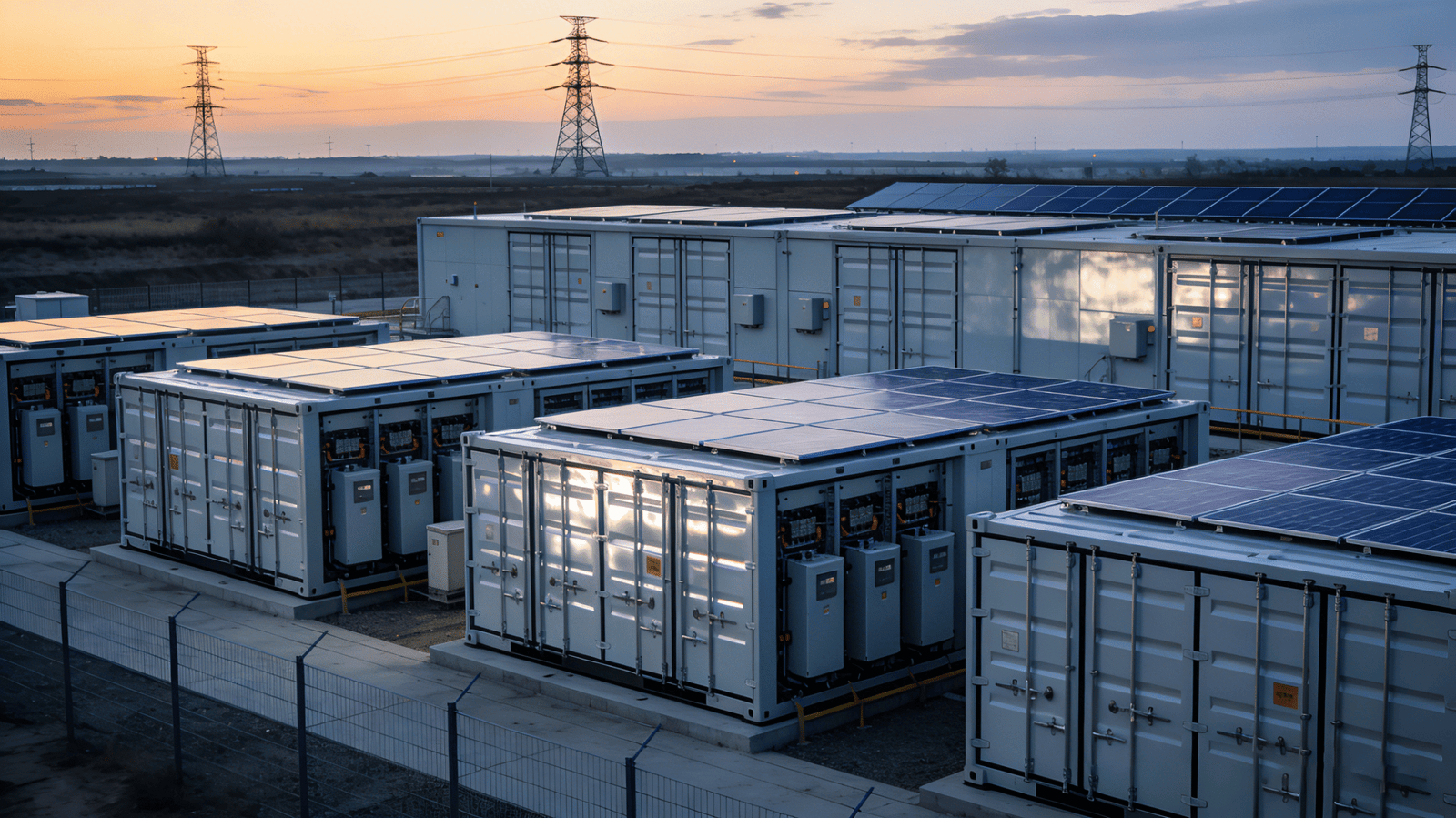
Industrial systems are scaling up from kilowatt-hour (kWh) to megawatt-hour (MWh) and even gigawatt-hour (GWh) scale. Furthermore, standardized container-based battery energy storage systems (BESS) are making large-scale industrial deployments faster and more cost-effective to install.
🌱 Stricter Green Manufacturing Standards
Battery suppliers will face increasingly rigorous environmental standards throughout the entire production process — from raw material sourcing to end-of-life recycling. Consequently, sustainability credentials and green certifications will become important purchasing criteria alongside performance and price. LongKun’s commitment to international environmental standards and green manufacturing principles positions it well for this trend.
For a deeper look at how energy storage is evolving across different industries, the IRENA Innovation Outlook and the IEA Batteries and Secure Energy Transitions report are both excellent reference points.
Frequently Asked Questions About Industrial Energy Storage Systems
Conclusion: Is an Industrial Energy Storage System Right for Your Business?
By now, one thing is clear: an industrial energy storage system is no longer just for large utilities and power companies. In 2026, it is a practical, cost-effective, and often essential tool for factories, data centers, industrial parks, telecom operators, and commercial facilities of all sizes.
The benefits are compelling on every level. First, it cuts energy bills through smart peak shaving. Second, it ensures uninterrupted operations with reliable backup power. Third, it supports your sustainability goals by enabling higher renewable energy use. And fourth, it can even generate new revenue through grid services participation.
The global market is growing rapidly — from $266.8 billion in 2024 toward nearly $570 billion by 2034. The technology is proven, the economics are improving every year, and the risks of not having storage are rising alongside energy price volatility and grid instability.
The key to success is choosing the right technology, sizing the system correctly, and — most importantly — partnering with an experienced, certified battery manufacturer who can customize a solution to your exact needs.
That’s exactly what LongKun Battery Group does.
⚡ Ready to Power Your Industrial Operations More Efficiently?
LongKun Battery Group has 15+ years of experience, 50+ expert engineers, 5 fully automated production lines, and the capability to deliver fully customized industrial energy storage battery solutions — all backed by UN38.3, CE, UL, RoHS, and UKCA certifications.
Whether you need a custom solution for a manufacturing plant, data center, AGV fleet, solar storage project, or telecom network, our team is ready to help — from initial design to after-sales support.
👉 Get a Free Custom Quote Explore Our ProductsLongKun Battery Group — Shenzhen, China | clkbattery.com | Serving Europe, USA, Australia, Japan & beyond