⚡ Quick Answer: How to Choose a Reliable Energy Storage Battery Manufacturer
To choose a reliable energy storage battery manufacturer, look for verified safety certifications (such as UL, IEC, CE, and RoHS), a strong warranty of at least 10 years, proven cycle life, a capable Battery Management System (BMS), stable company history, and responsive after-sales support. Always compare manufacturers on quality and compliance — not just price.
📋 Table of Contents
- Energy Storage Battery Market: Key Facts at a Glance
- What Makes an Energy Storage Battery Manufacturer Reliable?
- Why Safety Certifications Should Be Your First Filter
- How to Verify Manufacturing Quality and Consistency
- What Warranty Terms Actually Tell You
- Why Cycle Life and Throughput Matter More Than Price Alone
- How to Assess BMS and Thermal Management
- Why Bankability and Company Stability Matter for Long-Term Projects
- How to Evaluate After-Sales Support and Technical Response
- Which Applications Need Different Manufacturer Criteria
- Common Red Flags When Choosing a Battery Supplier
- Questions to Ask Before Placing an Order
- A Checklist for Comparing Manufacturers Side by Side
- Why LongKun Battery Group Stands Out as a Reliable Energy Storage Battery Manufacturer
- Final Thoughts: How to Choose a Reliable Energy Storage Battery Manufacturer
Energy Storage Battery Market: Key Facts at a Glance
First, let’s look at why choosing the right manufacturer matters more than ever. The energy storage market is growing incredibly fast. Therefore, picking the wrong supplier can be a very costly mistake.
| Data Point | Value | Why It Matters |
|---|---|---|
| Global BESS demand growth in 2025 | 51% | Shows how quickly the market is expanding |
| Global lithium-ion battery demand in 2025 | 1.59 TWh | Confirms massive, large-scale industry growth |
| Global BESS market size in 2025 | USD 50.81 billion | Useful market-size benchmark |
| Global BESS market size forecast in 2030 | USD 105.96 billion | Indicates very strong future demand |
| Projected CAGR (2025–2030) | 15.8% | Steady, long-term growth for the sector |
| Standard battery warranty term | At least 10 years | A baseline buyers should always expect |
| Typical end-of-warranty capacity floor | 70% | A key performance comparison metric |
✅ At-a-Glance: What to Check When Choosing a Battery Manufacturer
- ✔ Safety certifications — UN38.3, IEC, UL, CE, RoHS, UKCA
- ✔ Warranty terms — 10+ years, with clear capacity guarantees
- ✔ Cycle life & throughput — not just the upfront price
- ✔ BMS & thermal management — essential for safety and lifespan
- ✔ Company stability — financial health and bankability
- ✔ After-sales support — fast response and real technical help
- ✔ Factory-direct pricing — reduces procurement costs significantly
- ✔ Fast lead times — backed by automated production lines
In addition, this guide covers all the topics above in full detail. So, whether you’re buying batteries for solar storage, electric vehicles, or industrial use, you’ll know exactly what to look for.
1. What Makes an Energy Storage Battery Manufacturer Reliable?
A reliable energy storage battery manufacturer is one you can trust — before, during, and after your purchase. However, “reliable” means more than just having a nice website or a low price. Therefore, you need to look at several key areas together.
Here are the core things that define a truly reliable manufacturer:
- Verified safety certifications from globally recognized bodies
- Consistent production quality backed by documented QA processes
- Clear, honest warranty terms with real performance guarantees
- Real-world project experience across multiple industries
- Stable company history and financial strength
- Responsive after-sales support from qualified engineers
“For industrial batteries, standards such as IEC 62619 and UL 9540A are especially relevant. They address safety, abuse testing, and thermal runaway behavior.”
In short, a reliable manufacturer checks every box — not just one or two. Furthermore, the best manufacturers back up their claims with documents, test reports, and real case studies.
LongKun Battery Group, for example, holds full certifications including UN38.3, MSDS, IEC, CE, UKCA, RoHS, and UL. Additionally, their team includes engineers who previously worked at industry giants like BYD and CATL. As a result, their clients can trust both the product and the people behind it.
2. Why Safety Certifications Should Be Your First Filter
Safety certifications are the most important starting point. In fact, they are your first and best way to separate serious manufacturers from low-quality suppliers. Therefore, always ask for certificates before anything else.
Key Certifications to Look For
| Certification | What It Covers | Why It Matters |
|---|---|---|
| UL 9540A | Thermal runaway fire propagation testing | Critical for BESS fire safety verification |
| IEC 62619 | Safety for industrial lithium batteries | Strong global safety benchmark |
| UN38.3 | Transport safety for lithium batteries | Required for international shipping |
| CE / UKCA | Europe and UK market compliance | Legally required for EU and UK sales |
| RoHS | Restriction of hazardous substances | Environmental compliance standard |
| UL (General) | Product safety testing | Trusted standard in North America |
What Each Certification Actually Means
UL 9540A specifically evaluates how fire spreads when thermal runaway occurs in battery energy storage systems. Meanwhile, IEC 62619 sets safety requirements for secondary lithium cells and batteries used in industrial applications. Together, these two standards offer the strongest safety baseline for commercial buyers.
In addition, certifications like CE and UKCA are legally required if you’re selling or installing batteries in European or UK markets. Therefore, always verify these documents are current and authentic — not just printed on a brochure.
LongKun Battery Group proudly carries all the above certifications. Moreover, they have successfully passed audits from globally recognized brands. As a result, buyers in Europe, the USA, Australia, and Japan can purchase with full confidence.
3. How to Verify Manufacturing Quality and Consistency
Certifications tell you the minimum standard. However, consistent manufacturing quality tells you much more. Therefore, you should dig deeper into how a manufacturer actually builds their products every single day.
Production Standards to Look For
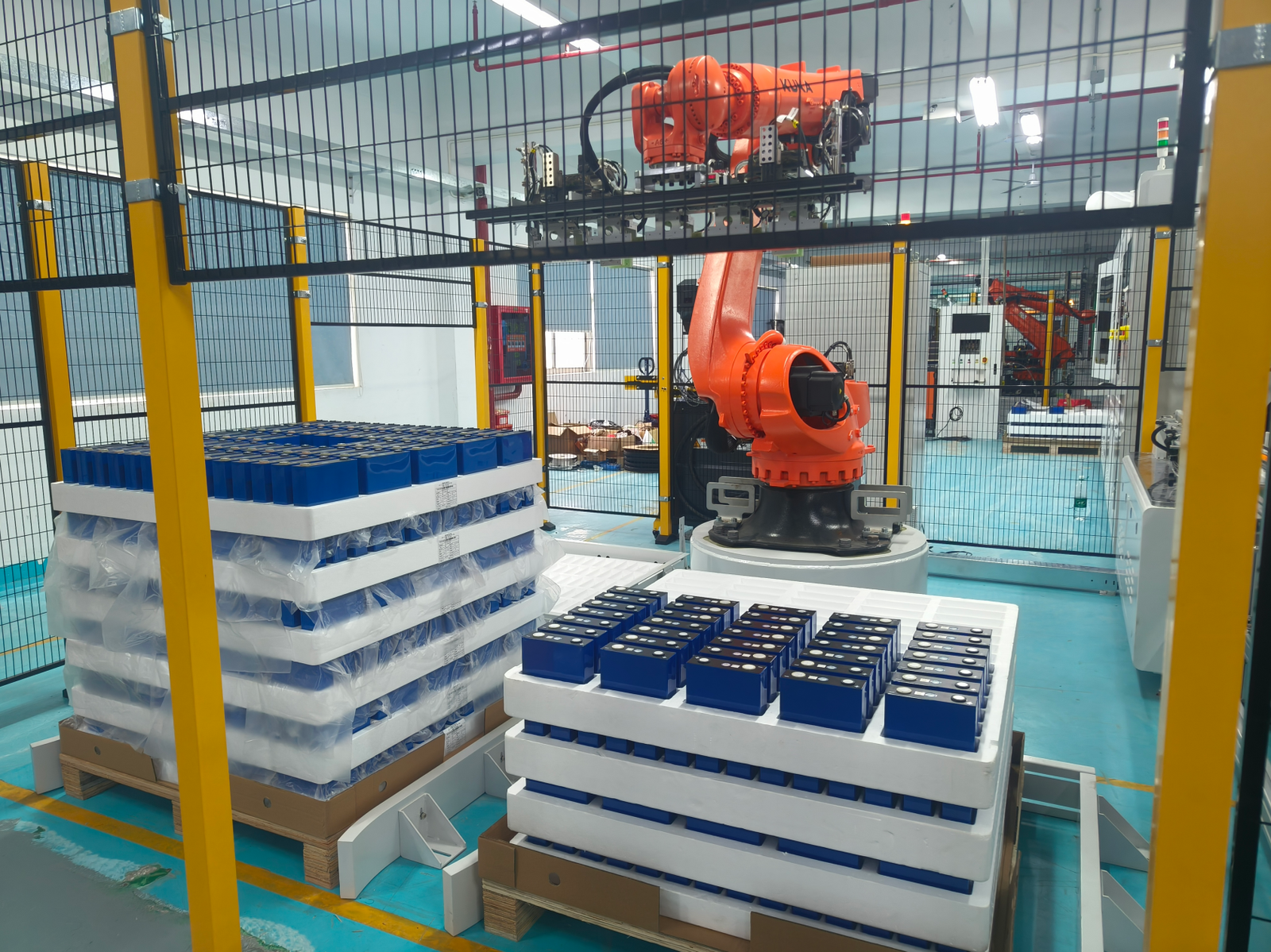
Look for manufacturers with Industry 4.0 standards. This means they use automated, data-driven production lines. As a result, human error is reduced significantly. Furthermore, their output is much more consistent across large batches.
LongKun Battery Group operates 5 fully automated production lines with Industry 4.0 standards. In addition, their annual output exceeds 50 million units. So, buyers can be confident that each battery unit meets the same high standard.
What Strong QA Documentation Looks Like
A trustworthy manufacturer can show you:
- Documented test procedures for each product type
- Traceability records — so every cell can be tracked back to its source
- Consistent certification results across different models and batches
- Third-party audit reports from recognized inspection bodies
Furthermore, LongKun uses Tier 1 brand cells and smart BMS technology. Therefore, every battery pack benefits from the highest quality inputs. In addition, their team of 50+ experienced engineers — including former BYD and CATL staff — oversees every stage of production.
LongKun Battery Group — Manufacturing Excellence
4. What Warranty Terms Actually Tell You
Warranty terms are a window into how much a manufacturer trusts their own product. Therefore, always read the full warranty document — not just the headline number.
What a Good Warranty Looks Like
According to EnergySage, a strong battery warranty should include:
- At least 10 years of coverage
- A guaranteed end-of-warranty capacity of at least 70%
- Clear cycle count or throughput limits
- Labor and shipping cost coverage
- Transferability to a new owner
Fine Print to Watch For
Unfortunately, some warranties look good on the surface. However, the fine print can include:
- Cycle limits that expire the warranty early
- Throughput caps that are too low for real-world use
- Exclusions for temperature extremes or installation errors
- No labor coverage — meaning you pay for repairs yourself
“Warranty length matters — but the fine print matters even more. Always check the end-of-warranty capacity, cycle clauses, throughput limits, and whether labor is covered.”
In addition, check whether the warranty is actually backed by a financially stable company. After all, a 10-year warranty is worthless if the company no longer exists in 5 years.
5. Why Cycle Life and Throughput Matter More Than Price Alone
Many buyers focus only on the upfront price. However, this is one of the most common — and costly — mistakes when choosing an energy storage battery.
Here’s why cycle life matters so much:
- A cheap battery that degrades in 3 years costs more than a quality battery that lasts 10 years
- Cycle count shows how many charge-discharge cycles the battery can handle
- Throughput tells you the total energy the battery will deliver across its entire life
- Both numbers together give you the true cost of ownership
For example, consider two batteries at the same price. Battery A has 3,000 cycles. Battery B has 6,000 cycles. Therefore, Battery B delivers twice the value — even if it costs slightly more upfront.
LongKun Battery Group uses Tier 1 brand advanced cells with high energy density and long-cycle performance. Furthermore, their batteries are built for high-rate applications. As a result, clients get both performance and long-term value from every unit.
Also, if you’re exploring newer chemistry options, check out this helpful guide on the advantages of sodium-ion batteries — a growing alternative worth knowing about.
6. How to Assess BMS and Thermal Management
The Battery Management System (BMS) is the brain of every energy storage battery. In addition, thermal management is the system that keeps the battery at a safe temperature. Together, they protect performance, safety, and lifespan.
Why BMS Quality Is So Important
A poor BMS can cause serious problems, including:
- Overcharging or over-discharging — which shortens battery life fast
- Cell imbalance — where some cells wear out faster than others
- Overheating — which can lead to thermal runaway and fire risk
- Inaccurate state-of-charge readings — making energy planning unreliable
What to Look for in BMS and System Design
- Active cell balancing — for even charge distribution
- Multi-level protection — voltage, current, and temperature safeguards
- Communication protocols — such as CAN, RS485, or Modbus for system integration
- Thermal runaway detection — with automatic disconnect features
LongKun Battery Group offers both standard and fully customized BMS solutions. Therefore, their clients get a system designed specifically for their application. Furthermore, their engineers are experienced in high-voltage, high/low-temperature, and explosion-proof battery designs. As a result, even the most demanding industrial applications are fully covered.
7. Why Bankability and Company Stability Matter for Long-Term Projects
For large or long-term projects, company stability is just as important as product quality. After all, a 10-year warranty only works if the manufacturer is still operating in 10 years.
Here’s what bankability means in simple terms: it’s how much lenders, investors, and project developers trust a manufacturer for long-term financial commitments. Therefore, bankable manufacturers are more likely to have:
- Strong revenue and a proven track record
- Recognized industry certifications and audit results
- A large and satisfied customer base
- Transparent financials and a stable supply chain
LongKun Battery Group was established in Shenzhen in 2009. In addition, they now serve over 1,500 satisfied clients globally. Furthermore, their main markets include Europe, the USA, Australia, and Japan — all highly regulated regions. As a result, their long-standing global presence is a strong bankability signal for buyers.
In addition, LongKun offers factory-direct supply. Therefore, there are no middlemen inflating the price. Buyers get better pricing and a direct line to the people who actually make the product.
8. How to Evaluate After-Sales Support and Technical Response
After-sales support is one of the most overlooked factors when buying batteries. However, it becomes critically important the moment something goes wrong. Therefore, always evaluate it carefully before placing an order.
Questions to Ask About Support
- How fast does the team respond to warranty claims or technical issues?
- Is local service available in your region?
- Do they provide full technical documentation and troubleshooting guides?
- Can their engineers support custom installation needs remotely?
Good after-sales support means less downtime for your operations. Furthermore, it makes batteries much easier to deploy at scale. In addition, strong technical documentation helps your own team maintain the system properly over time.
LongKun Battery Group provides full support from inquiry through to after-sale service. Their professional engineering team is available for technical guidance at every stage. Moreover, their goal is to reduce communication and procurement costs for every client. As a result, buyers enjoy a smooth, low-friction experience from start to finish.
9. Which Applications Need Different Manufacturer Criteria
Not all energy storage applications are the same. Therefore, the criteria you use to evaluate a manufacturer should match your specific use case.
| Application | Key Priorities | Special Requirements |
|---|---|---|
| Residential / Home Storage | Safety, warranty, ease of install | CE, RoHS, compact design |
| Commercial & Industrial (C&I) | Cycle life, BMS, compliance | IEC 62619, UL 9540A, strong support |
| Utility / Grid-Scale | Bankability, throughput, fire safety | Full audit trail, lender acceptance |
| Medical Equipment | Safety, reliability, custom design | High-precision BMS, long life |
| Drones / UAVs | Weight, energy density, fast charge | UN38.3 for transport, high rate cells |
| Marine / AGV / Robots | Durability, vibration resistance | Custom BMS, waterproofing options |
In particular, utility and C&I projects need stronger compliance proof, more robust fire testing, and deeper bankability evidence. On the other hand, residential buyers may prioritize simplicity and warranty length above all else.
LongKun Battery Group specializes in custom battery solutions for all of the above application types. In addition, if you’re considering a home or business battery setup, read this complete guide: Wall-Mounted Lithium Battery — The Complete Guide for Home and Business Use.
10. Common Red Flags When Choosing a Battery Supplier
Knowing what to look for is important. However, knowing what to avoid is just as critical. Therefore, watch out for these common warning signs.
🚩 Red Flags to Watch Out For
- ❌ Cannot provide authentic, up-to-date certifications
- ❌ Gives vague or confusing warranty language
- ❌ Avoids sharing test reports or QA documentation
- ❌ Cannot clearly explain degradation assumptions or cycle data
- ❌ Focuses only on lowest price while ignoring safety details
- ❌ Has no verifiable customer references or case studies
- ❌ Offers a warranty but excludes labor and shipping costs
- ❌ Has a very short company history with no track record
In addition, be cautious about suppliers who push for very fast decisions. A reliable manufacturer is confident in their product. Therefore, they welcome your questions and allow time for proper due diligence.
11. Questions to Ask Before Placing an Order
Before you commit to any manufacturer, make sure you ask the right questions. In fact, the quality of their answers will tell you a lot about their reliability.
- Can you provide full certification documents? (UN38.3, IEC, UL, CE, RoHS, UKCA)
- What are the exact warranty terms — including capacity floor, cycles, and throughput limits?
- Is the warranty transferable if the system is sold?
- Does the warranty cover labor and shipping costs?
- What is the expected cycle life under my specific use conditions?
- Can you share BMS specifications and thermal management details?
- Do you have thermal runaway or fire safety test results?
- What is your after-sales response time for warranty claims?
- Can you provide references from similar projects or industries?
- What is the lead time from order to delivery?
Furthermore, ask about the cell source. Tier 1 brand cells — such as those used by LongKun — perform much better over time. Therefore, knowing the cell brand is an important part of your evaluation.
12. A Checklist for Comparing Manufacturers Side by Side
Finally, use this simple comparison checklist when you’re evaluating multiple manufacturers. In addition, this table works well as a scoring tool — simply rate each supplier on each criterion.
| Evaluation Criteria | Supplier A | Supplier B | LongKun Battery |
|---|---|---|---|
| UN38.3, IEC, UL, CE, RoHS, UKCA certified | ? | ? | ✅ Yes |
| 10+ year warranty with 70% capacity floor | ? | ? | ✅ Yes |
| Tier 1 brand cells used | ? | ? | ✅ Yes |
| Industry 4.0 automated production | ? | ? | ✅ Yes (5 lines) |
| Custom BMS solutions available | ? | ? | ✅ Yes |
| Factory-direct pricing (no middlemen) | ? | ? | ✅ Yes |
| 50+ experienced engineers on staff | ? | ? | ✅ Yes |
| 1,500+ satisfied global clients | ? | ? | ✅ Yes |
| Fast lead times with strong supply chain | ? | ? | ✅ Yes |
| Full after-sales technical support | ? | ? | ✅ Yes |
13. Why LongKun Battery Group Stands Out as a Reliable Energy Storage Battery Manufacturer
LongKun Battery Group was founded in Shenzhen in 2009. Since then, they have grown into a leading one-stop custom battery pack manufacturer. Their services cover the full supply chain — from Battery Structure Design and Cell Manufacturing to BMS Customization, Battery Pack Production, and Battery Charger Development.
Full Certifications for Global Market Access
LongKun holds a complete set of international certifications, including UN38.3, MSDS, IEC, CE, UKCA, RoHS, and UL. Therefore, their batteries are fully compliant for sale and installation in Europe, the USA, Australia, Japan, and beyond. In addition, they have successfully passed audits from globally recognized brands — a strong independent verification of their quality.
Competitive, Factory-Direct Pricing
Because LongKun manufactures everything in-house, there are no middlemen in the supply chain. As a result, buyers benefit from factory-direct pricing that is significantly more competitive than resellers. Furthermore, this direct relationship makes communication faster and procurement simpler.
Fast Lead Times Backed by Automation
LongKun’s 5 fully automated production lines — combined with a strong, established supply chain — allow them to deliver orders faster than many competitors. Moreover, their annual output of 50+ million units proves they can handle both small and large-volume orders without delays.
Stable, Long-Term After-Sales Support
With a team of 50+ experienced engineers — including former BYD and CATL professionals — LongKun offers deep technical expertise at every stage. In addition, their 1,000 skilled workers and comprehensive quality management system ensure that every battery shipped is built to last. As a result, clients enjoy reliable long-term support from a team that truly understands their product.
Real-World Case Studies
LongKun’s track record speaks for itself. Here are a few examples of their successful partnerships:
- Medical Devices: Designed a lightweight, high-capacity battery pack for portable X-ray machines — improving mobility and extending runtime for healthcare professionals.
- Aerospace: Developed a specialized battery pack for satellite systems. The pack was designed to withstand extreme temperatures and radiation in space.
- Telecom / Base Stations: Created a high-performance battery pack with excellent resistance to harsh environments, ensuring stable power during long-term base station operation.
- Commercial Data Centers: Supplied high-capacity UPS battery packs to keep data center operations running smoothly during power outages.
- Golf Carts: Delivered custom battery solutions that earned high recognition from golf cart manufacturers across multiple regions.
14. Final Thoughts: How to Choose a Reliable Energy Storage Battery Manufacturer
Choosing the right energy storage battery manufacturer is one of the most important decisions you can make for any energy project. Therefore, take your time and evaluate carefully — don’t rush just because of a low price offer.
To summarize, here’s what you should always look for:
- ✅ Full safety certifications (UN38.3, IEC, UL, CE, UKCA, RoHS)
- ✅ Strong warranty terms — 10+ years with a 70% capacity floor
- ✅ High cycle life and throughput — the real measure of long-term value
- ✅ Smart BMS and thermal management — for safety and performance
- ✅ Company stability — a proven track record you can verify
- ✅ Factory-direct pricing — no middlemen, lower procurement costs
- ✅ Fast lead times — backed by automated production
- ✅ Reliable after-sales support — real engineers, real answers
In addition, the global energy storage market is growing at 15.8% CAGR through 2030. Therefore, now is the right time to partner with a manufacturer who can grow with you.
Furthermore, whether you need batteries for solar storage, electric vehicles, drones, medical equipment, or industrial systems — LongKun Battery Group has a proven, certified solution ready for you.
🔋 Ready to Find Your Custom Battery Solution?
LongKun Battery Group offers fast quotations, factory-direct pricing, and full engineering support from inquiry to delivery.
Our team is ready to help you choose the safest, most cost-effective battery for your specific application — no matter the industry.
✔ Fast Response | ✔ Tier 1 Brand Cells | ✔ Full Certifications | ✔ 1,500+ Happy Clients