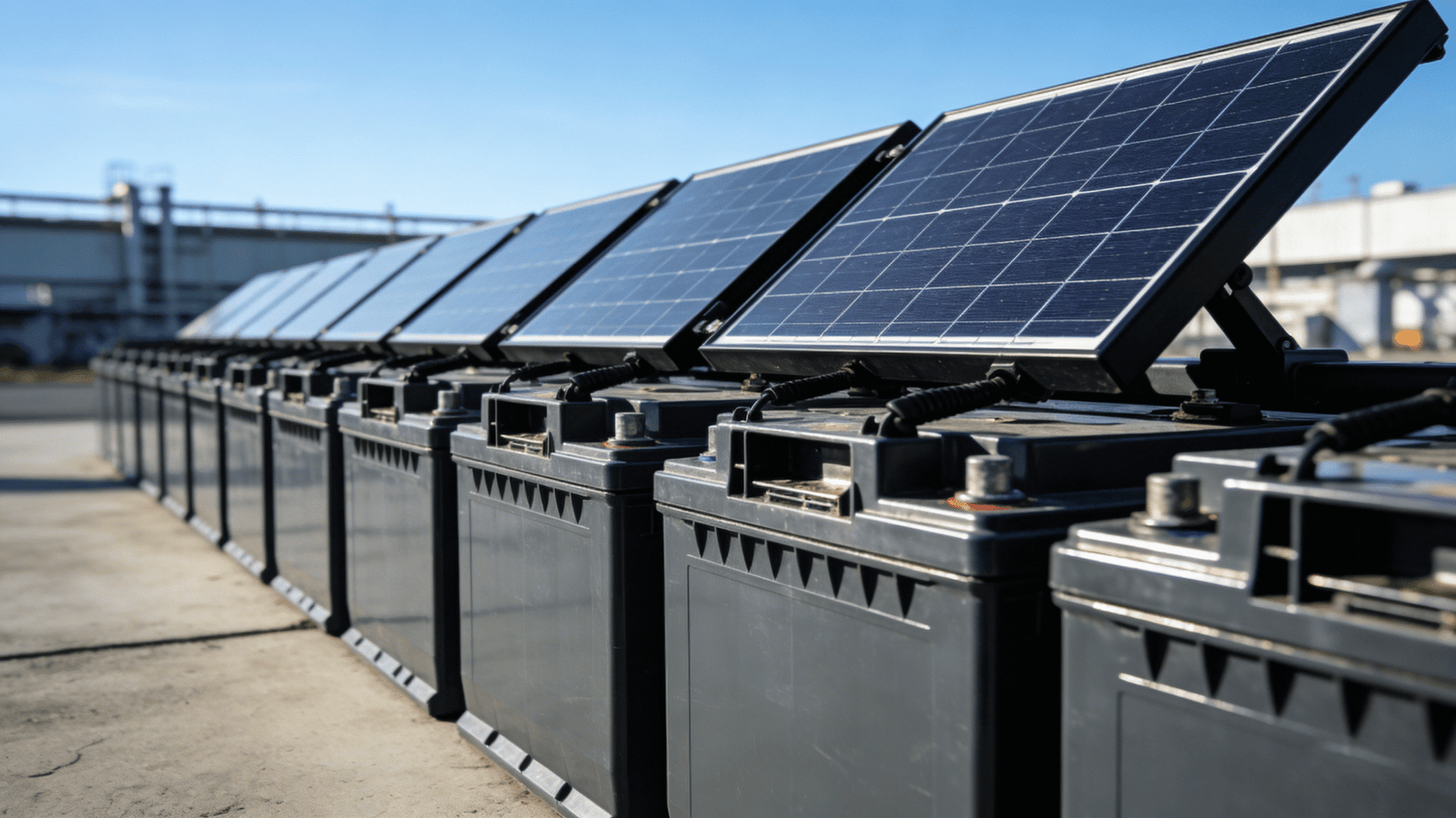
⚡ Key Takeaways: Factory Energy Storage at a Glance
| Topic | Key Fact |
|---|---|
| Global C&I Market Size (2024) | USD 9.5 billion |
| Market Forecast by 2034 | USD 38.2 billion (15% CAGR) |
| Best Battery for Factories | Lithium Iron Phosphate (LFP) |
| Top Benefits | Peak shaving, backup power, solar self-use, cost savings |
| Key Certifications to Look For | UN38.3, CE, UL, IEC, RoHS, UKCA, MSDS |
| LongKun Battery Group | Factory-direct supplier with all major certs, fast lead times, and full after-sales support |
Factories use a lot of electricity. In fact, energy costs are one of the biggest expenses for most manufacturing plants. But here’s the good news: energy storage for factory use is now one of the smartest ways to cut those costs and protect production from power outages.
Furthermore, the global industrial energy storage market is growing fast — from 60 GWh to a projected 167 GWh by 2030. So, more and more factories around the world are making the switch.
In this guide, you will learn everything you need to know about factory energy storage. We’ll cover how it works, how much it costs, which battery type is best, and how to choose the right supplier. Let’s dive in.
📋 Table of Contents
- What Is Energy Storage for a Factory?
- Why Factories Need Energy Storage Systems
- Top Benefits of Factory Energy Storage
- How Factory Energy Storage Reduces Peak Demand Charges
- How Energy Storage Improves Factory Backup Power and Uptime
- Energy Storage Use Cases in Manufacturing Plants
- Which Battery Type Is Best for Factory Energy Storage?
- How to Size a Battery Storage System for a Factory
- Battery Storage vs Diesel Generators — Which Is Better for Factories?
- Energy Storage for Solar-Powered Factories
- Key Costs, ROI, and Payback Period for Factory Battery Storage
- Safety, Maintenance, and Installation Considerations
- Common Mistakes When Buying Factory Energy Storage
- How to Choose an Energy Storage Supplier for Industrial Use
- Frequently Asked Questions About Factory Energy Storage
What Is Energy Storage for a Factory?
Think of it like a giant rechargeable battery for your whole factory. You charge it when electricity is cheap (usually at night). Then, you use that stored power during the day when electricity is more expensive or when the grid goes down.
In manufacturing, factory energy storage is mainly used for:
- Peak shaving — reducing your highest electricity demand
- Load shifting — moving energy use to cheaper time slots
- Backup power — keeping machines running during outages
- Solar self-consumption — storing solar energy for later use
Additionally, modern systems connect to a Battery Management System (BMS). The BMS controls how and when the battery charges and discharges. Therefore, the whole process is automatic and smart.
Why Factories Need Energy Storage Systems
Many factory managers ask: “Why do we need energy storage? We already have a power connection.” However, a simple grid connection is no longer enough. Here’s why:
1. Rising Electricity Costs
Electricity prices keep going up in most countries. Moreover, utilities often charge factories extra for using too much power at the same time. This is called a demand charge, and it can make up 30–50% of your monthly electricity bill.
2. Grid Instability
Power outages happen more often today due to extreme weather and aging infrastructure. Even a short outage can stop production lines, damage products, and cost thousands of dollars in losses.
3. Production Downtime Risks
Some factory processes simply cannot stop. For example, food processing, pharmaceutical manufacturing, and electronics assembly all need a constant, reliable power supply. A battery system provides that safety net.
4. Sustainability and ESG Goals
Many buyers and investors now require factories to show green credentials. Energy storage helps factories use more renewable energy. Therefore, it supports environmental goals and improves brand reputation.
Top Benefits of Factory Energy Storage
To summarize, here are the main benefits that factories gain from an energy storage system:
- ✅ Lower electricity bills through peak shaving and load shifting
- ✅ Backup power to protect against outages and keep production running
- ✅ Better use of solar energy — store it during the day, use it at night
- ✅ Reduced demand charges — pay less to your utility company every month
- ✅ Grid independence — less reliance on an unstable or expensive grid
- ✅ Lower carbon footprint — use cleaner energy, meet ESG targets
- ✅ Longer equipment life — stable power protects sensitive machines
“Energy storage is no longer a luxury for factories — it’s a competitive advantage. Factories that invest in storage today will spend less and produce more tomorrow.”
How Factory Energy Storage Reduces Peak Demand Charges
This is one of the biggest money-saving features of factory energy storage. So, let’s break it down simply.
What Are Peak Demand Charges?
Most utilities measure your factory’s peak demand — the highest amount of power you use at one moment in the month. They then charge you a fee based on that peak. Even if that moment only lasted 15 minutes, you pay for it all month.
How Does Peak Shaving Work?
A battery system watches your power use in real time. When it sees your demand starting to spike, it automatically kicks in. Therefore, the battery supplies extra power so that your peak demand stays lower. As a result, your utility bill drops significantly.
| Scenario | Without Storage | With Storage |
|---|---|---|
| Peak demand charge | High | Reduced by 20–40% |
| Energy cost timing | Pay peak rates | Shift to off-peak rates |
| Monthly bill impact | Unpredictable spikes | Stable and lower |
In addition, load shifting works alongside peak shaving. The battery charges at night when rates are low. Then it discharges during the day when rates are high. This simple strategy alone can save factories thousands of dollars each year.
How Energy Storage Improves Factory Backup Power and Uptime
Power outages cost factories money — fast. Even a 30-minute outage can halt an entire production run. However, a factory energy storage system changes that completely.
How Backup Power Works
When the grid goes down, the battery system switches on automatically. This switch usually happens in milliseconds. Therefore, most machines don’t even notice the change. Production keeps running.
What Can a Battery Backup System Power?
- Critical production lines
- Lighting and safety systems
- Data servers and control systems
- AGV and AMR robots on the factory floor
- Environmental controls (cooling, ventilation)
Moreover, unlike diesel generators, battery backup is silent, clean, and instant. There’s no startup delay and no fuel to store. As a result, factories get better protection with less hassle.
If you’re also thinking about home-scale battery solutions, check out our guide on how long home batteries last for useful context on battery lifespan and performance.
Energy Storage Use Cases in Manufacturing Plants
Factory energy storage is not one-size-fits-all. In fact, it works across many different types of manufacturing. Here are some real-world use cases:
Heavy Industry
Steel mills, cement plants, and foundries use massive amounts of power. Energy storage helps them flatten demand spikes and avoid costly utility penalties.
Food and Beverage
Food processing lines cannot stop without risking product loss. Furthermore, refrigeration systems need constant power. A battery system keeps everything running even during outages.
Electronics Assembly
Sensitive electronics require clean, stable power. Even tiny voltage fluctuations can cause defects. Therefore, energy storage acts as a power conditioner and backup in one.
Cold Storage Facilities
Temperature-controlled warehouses lose everything if power fails. An energy storage system ensures uninterrupted refrigeration, protecting millions of dollars in inventory.
Robotics and AGV-Powered Factories
Modern factories rely on automated guided vehicles (AGVs) and robotic systems. These need consistent, reliable power. At LongKun Battery Group, we specialize in custom battery packs for AGV and AMR robots — designed to handle the high demands of industrial automation.
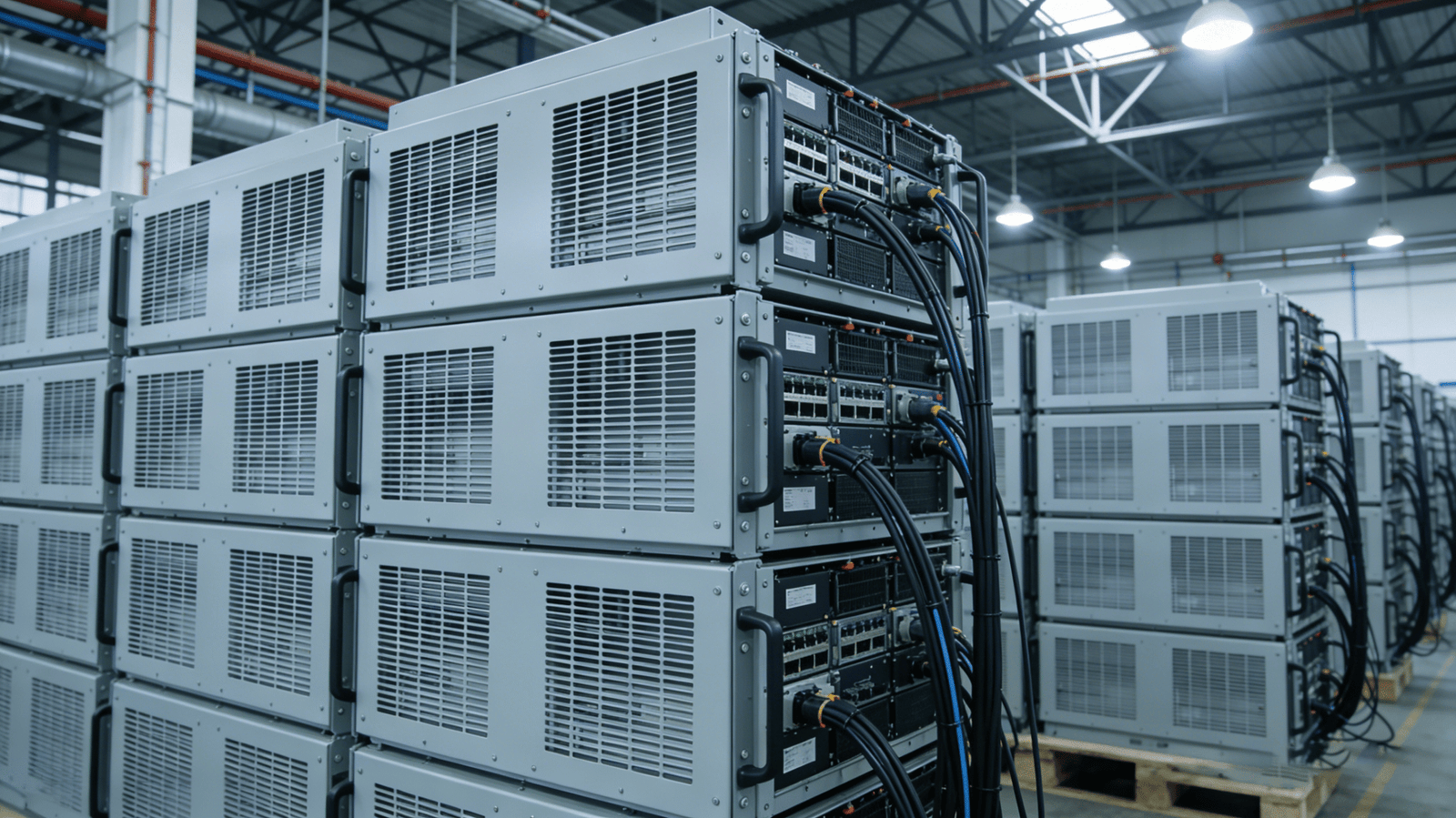
Which Battery Type Is Best for Factory Energy Storage?
Not all batteries are the same. Choosing the right one is critical for safety, performance, and cost. Here’s a simple comparison:
| Battery Type | Cycle Life | Safety | Cost | Best For |
|---|---|---|---|---|
| LFP (LiFePO₄) | 3,000–6,000+ cycles | Excellent | Medium | Most factory applications |
| NMC (Lithium NMC) | 1,500–3,000 cycles | Good | Higher | High-energy density needs |
| Lead-Acid | 300–500 cycles | Moderate | Low upfront | Short-term or low-budget |
For most factories, LFP (Lithium Iron Phosphate) is the clear winner. It offers the best balance of safety, cycle life, and total cost of ownership. Additionally, LFP batteries perform well in high-temperature industrial environments.
At LongKun Battery Group, we use Tier 1 brand cells from trusted sources. Our engineering team — including engineers with experience at BYD and CATL — designs every battery pack for your specific factory application. Furthermore, all our battery packs meet UN38.3, CE, UL, IEC, RoHS, UKCA, and MSDS international certifications, so they’re ready for markets in Europe, the USA, Australia, Japan, and beyond.
Learn more about the IEC international battery standards to understand what these certifications mean for industrial safety.
How to Size a Battery Storage System for a Factory
Getting the size right is very important. A system that is too small won’t help enough. A system that is too large wastes money. Here’s a step-by-step guide:
Step 1: Analyze Your Load Profile
Look at your electricity bills for the past 12 months. Find your peak demand (measured in kW) and your total daily energy use (measured in kWh).
Step 2: Decide What You Need the Battery For
- If it’s for peak shaving, size the battery to cover your demand spikes.
- If it’s for backup power, decide how long you need to run and which systems are critical.
- If it’s for solar storage, match the battery size to your solar panel output.
Step 3: Consider Your Tariff Structure
Check your energy tariff. Specifically, look at peak and off-peak hours. This tells you when to charge and when to discharge your battery for maximum savings.
Step 4: Choose Power Rating and Energy Capacity
Two key numbers matter:
- Power rating (kW) — how fast the battery can deliver energy
- Energy capacity (kWh) — how much total energy it can store
Step 5: Get a Professional Assessment
Every factory is different. Therefore, the best approach is to work with an experienced supplier who can do a detailed site analysis. At LongKun Battery Group, our team of 50+ engineers handles sizing, design, and BMS customization — all in one place. This saves you time and reduces your procurement cost.
Battery Storage vs Diesel Generators — Which Is Better for Factories?
Many factories already have diesel generators. So, is it worth switching to battery storage? Here’s a direct comparison:
| Feature | Battery Storage | Diesel Generator |
|---|---|---|
| Startup time | Milliseconds | 10–30 seconds |
| Fuel needed | No | Yes (diesel) |
| Noise | Silent | Very loud |
| Emissions | Zero | High (CO₂, NOx) |
| Maintenance | Low | High (oil, filters, fuel) |
| Peak shaving | Yes | No |
| Long-term cost | Lower | Higher (fuel + maintenance) |
In most cases, battery storage wins for factories that need fast, clean, and reliable power protection. However, for very long outages (days), a hybrid approach — battery plus generator — can make sense. Therefore, it’s not always either-or.
Energy Storage for Solar-Powered Factories
More and more factories are installing solar panels on rooftops and parking areas. However, solar alone has a big problem: it produces power during the day, but factories often need power in the evening or at night. That’s where battery storage comes in.
How Solar + Storage Works Together
- Solar panels generate electricity during daylight hours.
- Excess solar energy charges the factory’s battery system.
- In the evening or during peak tariff hours, the factory uses the stored energy.
- As a result, the factory pays less to the grid and uses more of its own clean energy.
Key Benefits of Solar + Storage for Factories
- Higher solar self-consumption rate — use more of what you generate
- Lower grid dependence — buy less from the utility
- Better ROI on solar investment — storage makes the solar system more valuable
- Backup power capability — even when the sun isn’t shining
For a broader perspective on battery storage systems, also explore our resource on the best battery storage systems, which covers key buying criteria that apply to both home and commercial installations.
Additionally, you can learn more about solar-plus-storage standards from the UL Energy Storage Systems resource center for trusted technical guidance.
Key Costs, ROI, and Payback Period for Factory Battery Storage
One of the first questions every factory manager asks is: “How much does this cost, and when will I get my money back?” There’s no single answer, because every factory is different. However, here are the key cost drivers to understand:
What Affects the Cost?
- System size — larger systems cost more upfront
- Battery chemistry — LFP is more cost-effective over time
- Installation complexity — existing electrical infrastructure matters
- BMS sophistication — smarter systems cost a bit more but save more
- Supplier type — factory-direct suppliers like LongKun offer lower prices than resellers
How to Think About ROI
The return on investment comes from multiple sources combined:
- Monthly savings on demand charges
- Savings from time-of-use energy shifting
- Avoided losses from production downtime
- Potential income from grid services (in some markets)
For most factories with high demand charges, payback periods range from 3 to 7 years. After that, the system continues to save money for 10+ years. Therefore, the long-term financial case is very strong.
Safety, Maintenance, and Installation Considerations
Safety is the top priority for any industrial battery system. Furthermore, factories present unique challenges that a standard commercial system may not handle well.
Industrial Environment Challenges
- High temperatures — factories can get very hot, especially near production lines
- Dust and particulates — these can damage battery cells and electronics
- Vibration — heavy machinery creates constant vibration that can weaken connections
- Space constraints — battery systems need proper ventilation and access
Why the BMS Is Critical
A smart Battery Management System (BMS) is the brain of your factory energy storage system. It monitors temperature, voltage, current, and state of charge in real time. Therefore, it prevents overcharging, overheating, and other dangerous conditions.
At LongKun Battery Group, our engineers design and customize BMS solutions for specific factory environments — including high-voltage, high/low temperature, and explosion-proof applications. This level of specialization is critical for safe industrial deployment.
Certifications to Demand from Your Supplier
Before buying any factory energy storage system, make sure it carries these certifications:
- UN38.3 — transport safety standard
- IEC — international electrotechnical safety
- CE — required for European markets
- UKCA — required for the UK market
- UL — required for the US market
- RoHS — restricts hazardous substances
- MSDS — material safety data sheet
LongKun Battery Group holds all of the above certifications. As a result, our battery packs are ready for direct deployment in Europe, the USA, the UK, Australia, Japan, and more — without extra compliance steps for you.
For more details on global battery safety standards, visit the International Electrotechnical Commission (IEC) official website.
Common Mistakes When Buying Factory Energy Storage
Many factories make avoidable mistakes when purchasing energy storage systems. Here are the most common ones — and how to avoid them:
❌ Mistake 1: Undersizing the System
Buying a system that’s too small means it can’t handle your peak loads. Therefore, you don’t get the savings or backup protection you expected. Always start with a proper load analysis.
❌ Mistake 2: Ignoring BMS Quality
A cheap BMS can damage your battery or create safety risks. The BMS is arguably more important than the cells themselves. Don’t skip on this.
❌ Mistake 3: Choosing Uncertified Suppliers
Some low-price suppliers skip certifications. However, this creates legal risk and safety hazards. Always require UN38.3, CE, UL, and relevant market certifications before purchasing.
❌ Mistake 4: Skipping the Site Assessment
Every factory’s electrical setup is different. Furthermore, installing the wrong system in the wrong way can cause compatibility issues. Therefore, always do a professional site assessment first.
❌ Mistake 5: Choosing a Trader Instead of a Manufacturer
Traders mark up prices and often have limited technical knowledge. In contrast, working directly with a manufacturer like LongKun Battery Group gives you lower prices, faster lead times, and direct engineering support.
How to Choose an Energy Storage Supplier for Industrial Use
Choosing the right supplier is just as important as choosing the right battery. Here’s what to look for:
✅ Full Certifications
Your supplier must hold certifications for your target market. LongKun Battery Group carries UN38.3, MSDS, IEC, CE, UKCA, RoHS, and UL — covering all major global markets.
✅ Customization Capability
Every factory has unique needs. Therefore, your supplier should be able to customize battery pack design, BMS settings, voltage, capacity, and form factor. LongKun offers a full one-stop service: from cell selection to finished pack, BMS, and charger.
✅ Proven Track Record
Look for a supplier with real case studies across multiple industries. LongKun has successfully delivered solutions for:
- Telecom companies (base station batteries with high energy density and harsh-environment resistance)
- Aerospace companies (batteries engineered for extreme temperatures and radiation)
- Data center backup systems (high-capacity, long-lasting packs for critical operations)
- Medical equipment manufacturers (lightweight, fast-charging portable device batteries)
✅ Fast Lead Times
Production delays hurt your project timeline. LongKun operates 5 fully automated Industry 4.0 production lines with an annual output of over 50 million units. As a result, we can fulfill orders faster than most competitors.
✅ Strong After-Sales Support
Battery systems need ongoing technical support. Moreover, industrial applications require specialized knowledge. LongKun’s professional engineering team provides long-term after-sales support — from commissioning to troubleshooting — reducing your operational risk.
✅ Factory-Direct Pricing
Buying factory-direct from LongKun Battery Group eliminates the middleman. Therefore, you get competitive pricing without sacrificing quality. Our clients in Europe, the USA, Australia, and Japan consistently note the cost advantage of working directly with us.
Frequently Asked Questions About Factory Energy Storage
What is energy storage for a factory?
Energy storage for a factory means using batteries or other systems to save electricity and release it later — when power is expensive, limited, or unavailable. It is mainly used for peak shaving, load shifting, backup power, and solar self-consumption in manufacturing plants.
How does battery storage help factories save money?
Factories charge batteries during off-peak hours when electricity is cheap. Then they discharge during peak hours when rates are high. This reduces demand charges and energy costs. For many factories, this saves 20–40% on monthly electricity bills.
Can energy storage reduce peak demand charges in manufacturing?
Yes. Industrial battery systems are specifically designed for peak shaving. They monitor your power use in real time and supply extra energy when demand spikes. As a result, your utility sees a lower peak and charges you less each month.
Is factory battery storage worth it?
Yes, for most factories with high demand charges, production downtime risks, or solar installations. The ROI is strongest when the system provides both cost savings and backup power. Typical payback periods range from 3 to 7 years, after which savings continue for 10+ more years.
How long can an industrial battery storage system power a factory?
It depends on the battery size and which systems are backed up. Most factory systems are designed to power critical loads — like control systems, lighting, and key production lines — for several hours. Full-factory long-duration backup requires a larger system or a hybrid battery-plus-generator setup.
What is the best battery type for factory energy storage?
For most factory applications, Lithium Iron Phosphate (LFP) is the best choice. It offers excellent safety, a long cycle life of 3,000–6,000+ cycles, and strong performance in industrial environments. The right choice also depends on your specific load, space, and budget.
Can factories use energy storage with solar panels?
Yes. Battery storage is commonly paired with rooftop solar so factories can store midday excess generation and use it during peak tariff hours or at night. This combination significantly improves the ROI of both the solar and storage investments.
What are the risks of battery storage in industrial plants?
Main risks include heat management, dust exposure, vibration damage, and integration complexity with existing electrical systems. These risks are manageable with proper enclosure design, cooling systems, a smart BMS, and certified battery packs from a reputable industrial supplier.
How much does industrial energy storage cost?
Costs vary widely based on system size, battery chemistry, installation complexity, and BMS requirements. Every factory project is different. The best approach is to get a site-specific assessment and quote from a factory-direct supplier to get the most accurate and competitive pricing.
How do you size a battery storage system for a factory?
Start by analyzing your peak load (kW) and total daily energy use (kWh). Then decide what you need the battery for — peak shaving, backup, or solar storage. Consider your tariff structure to optimize charge/discharge timing. Finally, work with an experienced engineer to design the right power rating and energy capacity for your specific factory.
Ready to Protect Your Factory with Reliable Energy Storage?
Energy storage for factories is no longer a future technology — it’s a smart investment that’s already paying off for manufacturers around the world. Whether you need to cut peak demand charges, protect against power outages, or maximize your solar investment, the right battery system makes a measurable difference.
However, the key to success is choosing the right solution for your factory — and the right partner to deliver it.
LongKun Battery Group offers everything you need in one place:
- ✅ Full global certifications — UN38.3, MSDS, IEC, CE, UKCA, RoHS, UL
- ✅ Factory-direct competitive pricing — no middlemen, lower procurement cost
- ✅ Fast lead times — 5 automated production lines, 50M+ units/year capacity
- ✅ Custom engineering — BMS design, pack customization, one-stop service
- ✅ Stable after-sales support — 50+ engineers, long-term technical partnership
- ✅ Proven track record — 1,500+ satisfied clients across 4 continents
Therefore, don’t wait until the next power outage or electricity bill shock to take action. Contact our engineering team today and get a custom factory energy storage solution designed specifically for your needs.
⚡ Fast quotation · Strong technical support · Reliable long-term cooperation · clkbattery.com