⚡ Key Takeaways at a Glance
| Topic | Quick Answer |
|---|---|
| What is it? | An all-in-one energy storage unit — batteries, BMS, PCS, and EMS — packed inside a standard shipping container, ready to plug in and go. |
| Best battery chemistry | Lithium Iron Phosphate (LiFePO₄ / LFP) — safest, longest life, zero toxic materials. |
| Typical lifespan | 10+ years; LFP packs rated for 4,000–8,000 charge cycles. |
| Top applications | Grid stabilization, solar/wind storage, backup power, peak shaving, microgrids. |
| Market size (2024) | ~$9.31 billion USD, growing to ~$61 billion by 2034 (CAGR 20.7%). |
| Key safety standards | UL 9540, UL 9540A, IEC, CE, NFPA 855. |
| Who supplies them? | LongKun Battery Group (clkbattery.com) — custom LFP packs for industrial & home storage. |
Energy storage is changing the world. Furthermore, the container energy storage system is right at the center of that change. These smart, self-contained units make it possible to store huge amounts of electricity — and use it exactly when it’s needed. Moreover, they are safe, scalable, and surprisingly simple to set up.
In this complete guide, you will learn exactly what a container energy storage system is, how it works, why the market is exploding, and how to choose the right one for your project. Let’s dive in!
📋 Table of Contents
- What Is a Container Energy Storage System?
- Container Energy Storage Market Size & Growth
- Key Components Inside a Container Energy Storage System
- Top Benefits of a Container Energy Storage System
- Main Applications of Container Energy Storage Systems
- Why LiFePO₄ Is the Best Battery for Container Systems
- Safety, Compliance, and Standards for Container Energy Storage
- How to Choose the Right Container Energy Storage System
- Frequently Asked Questions
- Conclusion: The Future Is Containerized
What Is a Container Energy Storage System?
Simple Definition
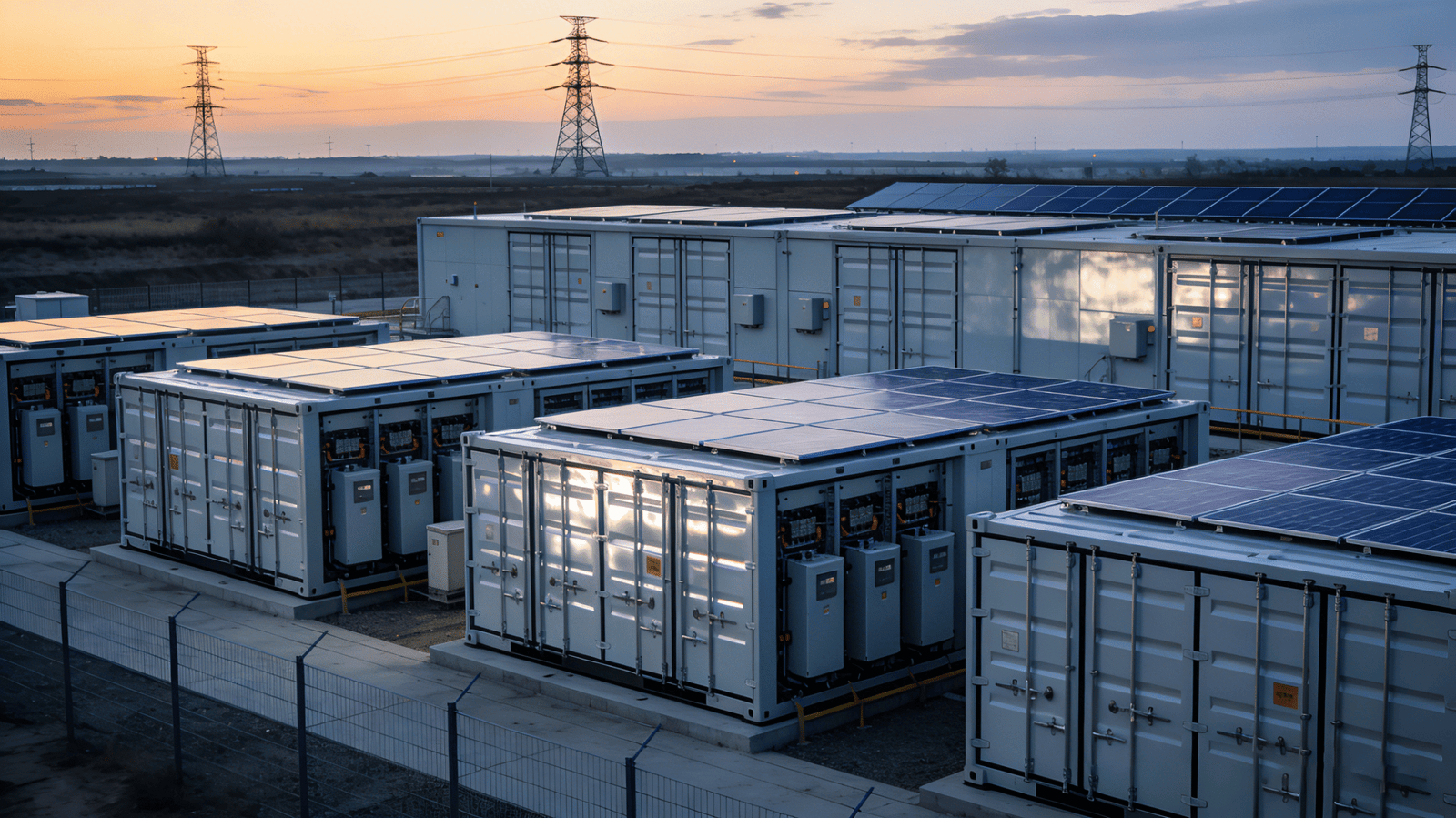
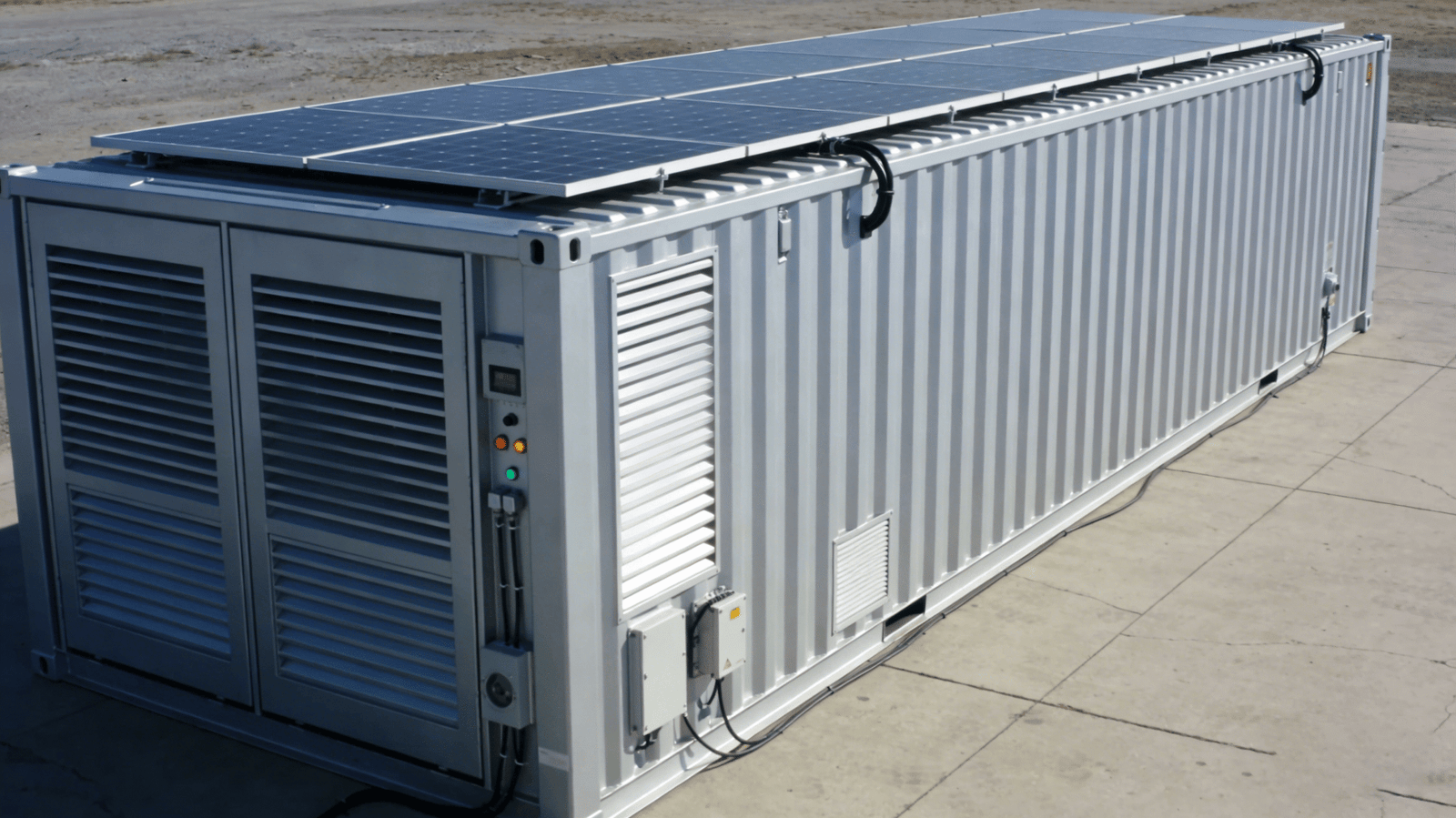
A container energy storage system (also called a containerized BESS, or battery energy storage system) is essentially a large, rechargeable battery inside a shipping container. Think of it as a giant power bank. Additionally, it includes all the smart electronics needed to charge, manage, and discharge electricity safely.
These systems usually fit inside a standard 20-foot or 40-foot container — the same kind you see on cargo ships. Because of that, they are easy to transport, quick to set up, and simple to expand. You can add more containers as your energy needs grow.
How It Works (Step by Step)
Understanding how a containerized energy storage system works is actually pretty straightforward. Here is the process, broken down simply:
- 1
Power comes in. Electricity from the grid, solar panels, or wind turbines enters the container through the PCS (Power Conversion System). - 2
Power is converted. The PCS converts AC power (from the grid) into DC power that the batteries can store safely. - 3
Batteries store the energy. The battery packs — usually LiFePO₄ (LFP) cells — hold the electricity until it is needed. - 4
BMS keeps everything safe. The Battery Management System (BMS) watches every single battery cell. It prevents overcharging, overheating, and over-discharging. - 5
EMS decides when to act. The Energy Management System (EMS) is like the brain. It decides the best time to charge or discharge based on electricity prices, grid signals, or site needs. - 6
Power goes out. When energy is needed, the PCS converts DC power back to AC and sends it to the grid, building, or facility.
“A container energy storage system is not just a battery — it’s a complete, intelligent power station inside a box.”
↑ Back to top of section | 📋 Table of Contents
Container Energy Storage Market Size & Growth
The container energy storage market is growing at an incredible speed. Therefore, understanding the market data helps you see just how important these systems are becoming worldwide.
Containerized BESS Market Size (2024)
Projected Market Size (2034)
Annual Growth Rate (CAGR 2025–2034)
Global Energy Storage Market Forecast (2034)
The numbers are striking. Moreover, multiple research firms agree that growth will remain strong throughout the decade. Here is a full market snapshot table:
| Metric | Value | Year / Period |
|---|---|---|
| Containerized BESS market size | $9.31 billion USD | 2024 |
| Forecast containerized BESS market | $61.03 billion USD | 2034 |
| CAGR (containerized BESS) | 20.7% | 2025–2034 |
| Battery ESS container market (alt. estimate) | $5.9 billion USD | 2024 |
| Container-type BESS segment projection | ~$12 billion USD | 2030 |
| Global energy storage systems market | $668.7 billion USD | 2024 |
| Global energy storage systems forecast | $5.12 trillion USD | 2034 |
| Global ESS CAGR | 21.7% | 2025–2034 |
Clearly, the containerized energy storage industry is not slowing down. In fact, it’s accelerating. Government clean energy policies, falling battery costs, and the rapid expansion of solar and wind power are all driving this growth. Additionally, major markets in Europe, the USA, Australia, and Japan are leading the charge.
For further reading on global trends, see the International Energy Agency’s Energy Storage overview and the IRENA Battery Storage report — both excellent free resources.
↑ Back to top of section | 📋 Table of Contents
Key Components Inside a Container Energy Storage System
A container energy storage system is more than just batteries. Furthermore, each component plays a very specific and important role. Together, they create a safe, smart, and efficient power storage unit.
| Component | Main Function | Why It Matters |
|---|---|---|
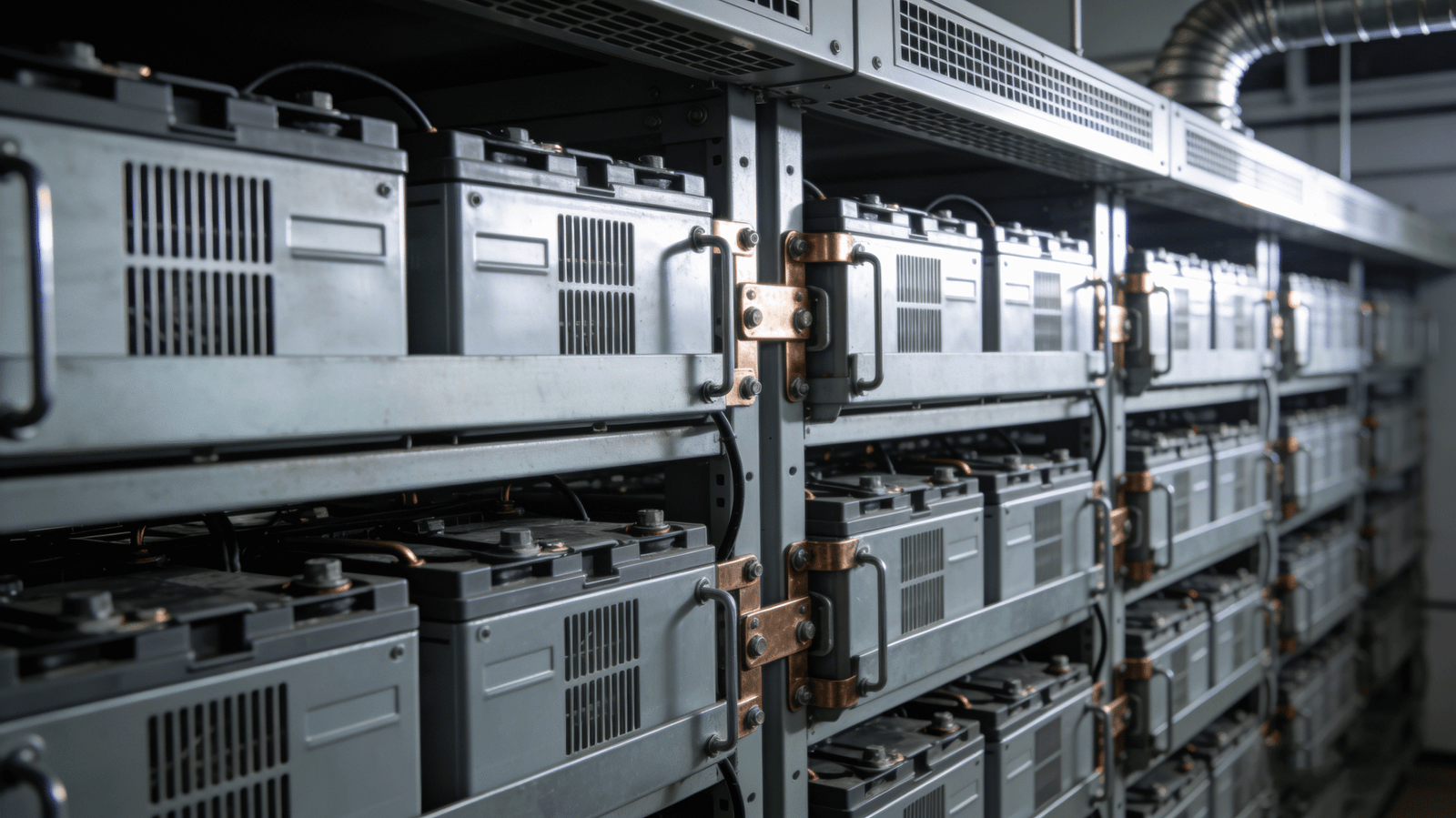
| Battery Packs (LFP) | Store electrical energy | Long cycle life (4,000–8,000 cycles), high safety, no toxic rare earth materials |
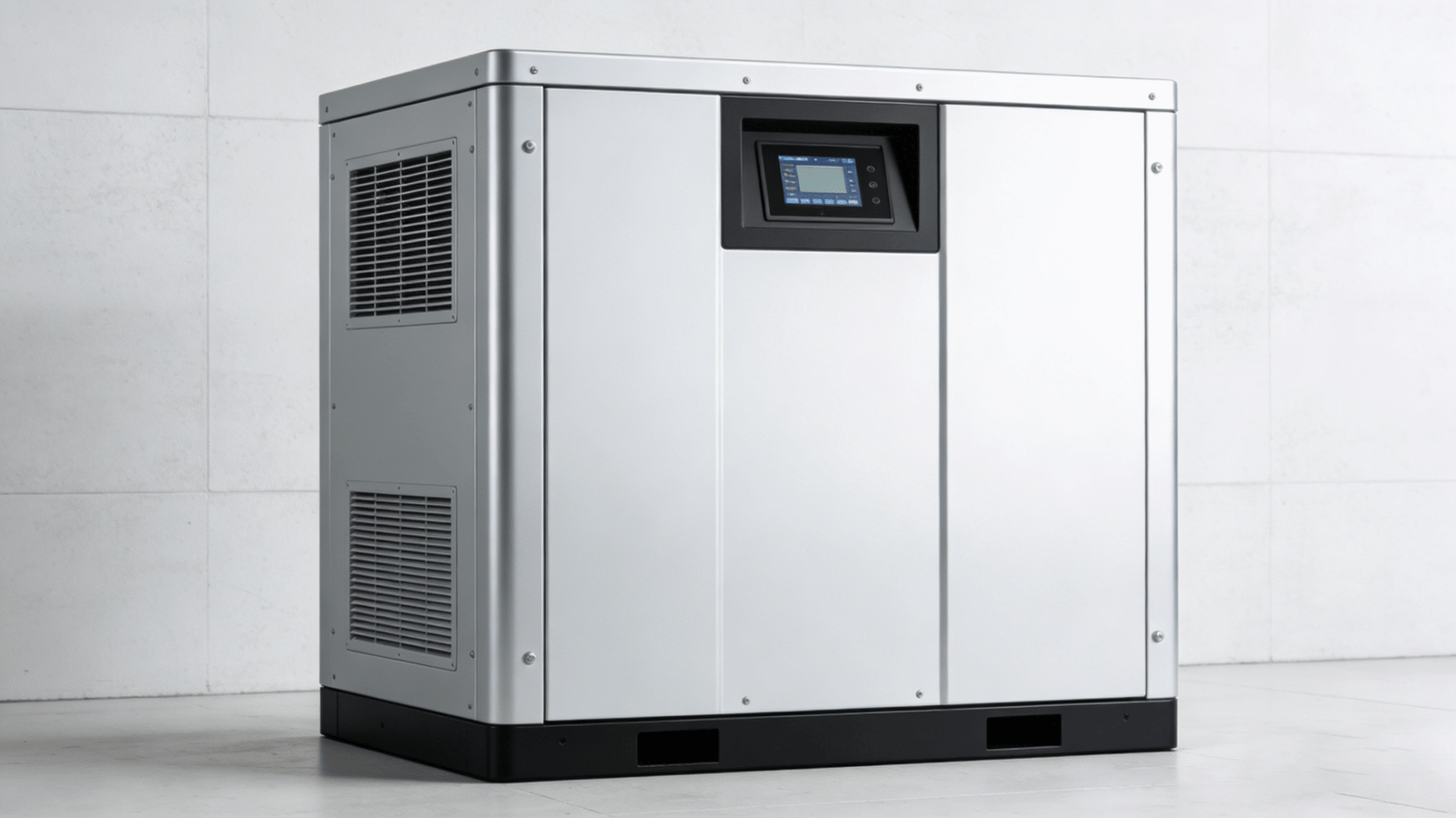
| PCS (Power Conversion System) | AC/DC conversion, grid interface | Enables grid connection, reactive power support, smooth energy flow |
| BMS (Battery Management System) | Cell monitoring, balancing, protection | Prevents overcharge, over-discharge, and overheating — keeps batteries healthy and safe |
| EMS (Energy Management System) | System optimization, scheduling, remote control | Coordinates charge/discharge for maximum savings and grid service |
| Thermal Management (HVAC) | Cooling and heating to keep cells in safe range | Protects battery performance and extends overall system lifetime |
| Fire Protection System | Detection, suppression, safe venting | Required for safety code compliance; protects site and personnel |
Top Benefits of a Container Energy Storage System
Why are so many companies choosing containerized energy storage over other options? Because the benefits are very real and very significant. Moreover, these advantages apply whether you are a grid operator, a factory owner, or a renewable energy developer.
Modular & Scalable
One of the biggest advantages is flexibility. Specifically, a container energy storage system grows with you. Need more storage capacity? Simply add another container. You do not need to rebuild anything from scratch. This modularity means you only pay for what you actually need, today.
Fast to Deploy
Traditional energy storage projects can take months or even years to build on-site. However, a container system arrives pre-assembled and factory-tested. As a result, installation time drops dramatically. In many cases, a system can go from delivery to operation in just a few days.
Furthermore, manufacturing in a controlled factory environment lowers both construction time and on-site labor cost. This means fewer surprises and faster return on investment.
Safe & Reliable
Safety is built into every layer. Importantly, LiFePO₄ batteries are thermally stable and much safer than older lithium chemistries. They are extremely unlikely to catch fire, even under stress. Additionally, integrated fire detection, gas venting, and compartmentalization provide extra layers of protection.
Saves Money
Container energy storage systems cut costs in multiple ways. First, they support peak shaving — charging at night when electricity is cheap, then discharging during expensive daytime peak hours. Second, they reduce reliance on diesel generators, cutting fuel and maintenance bills. Third, they allow businesses to participate in energy arbitrage markets to earn revenue.
Modular Design
Easily add more containers as your energy needs grow.
Fast Deployment
Pre-built and factory-tested. On-site setup in days, not months.
Safe by Design
LFP chemistry plus fire suppression and smart BMS protection.
Lower Energy Costs
Peak shaving and demand charge reduction cut your electricity bills.
Eco-Friendly
LFP batteries contain no toxic or rare earth materials.
Remote Monitoring
EMS allows real-time control and monitoring from anywhere.
↑ Back to top of section | 📋 Table of Contents
Main Applications of Container Energy Storage Systems
A container energy storage system is incredibly versatile. Therefore, it is used in many different industries and settings. Here are the most important and common applications today.
Grid Stabilization & Frequency Regulation
Power grids need to stay balanced at all times. Specifically, container BESS helps transmission and distribution operators balance supply and demand in real time. It provides fast frequency regulation and voltage support, keeping the grid stable and preventing blackouts.
Renewable Energy Integration (Solar + Wind)
Solar and wind energy are not always available when you need them. Fortunately, container storage solves this problem. The system stores surplus solar or wind energy when generation is high. Then it releases that stored power during cloudy days, calm nights, or peak demand periods. As a result, renewable energy becomes more reliable and more valuable.
For more on solar-plus-storage trends, visit the U.S. National Renewable Energy Laboratory (NREL) Energy Storage page.
Backup Power & Microgrids
Hospitals, data centers, and factories cannot afford a power outage. Therefore, container BESS delivers instant backup power when the grid fails. Moreover, it can power an entire microgrid, keeping critical operations running independently from the main grid.
👉 See how LongKun’s Industrial Energy Storage System supports backup power and commercial installations.
Peak Shaving, Demand Charge Reduction & Energy Arbitrage
Large electricity users pay expensive “demand charges” based on their peak usage. However, a container energy storage system can dramatically reduce those peaks. It charges during cheap off-peak hours and discharges during expensive peak hours. As a result, businesses save significantly on monthly electricity bills and can even earn money by selling stored power back to the grid.
| Application | Typical Users | Main Benefits |
|---|---|---|
| Grid Stabilization & Frequency Regulation | Grid operators, utilities, IPPs | Balance supply/demand, improve power quality and reliability |
| Renewable Energy Integration | Solar/wind farms, developers | Reduce curtailment, enable firm and dispatchable capacity |
| Backup Power / Microgrids | Hospitals, data centers, factories | Instant backup power, island-mode operation, resilience |
| Peak Shaving & Load Shifting | Commercial & industrial users | Lower demand charges, optimize electricity tariffs |
| Remote / Off-Grid Sites | Islands, mines, telecom towers | Reduce diesel use, improve energy independence |
👉 For residential and home-scale storage, explore LongKun’s Home Energy Storage System — compact, safe, and built for daily solar storage.
↑ Back to top of section | 📋 Table of Contents
Why LiFePO₄ Is the Best Battery for Container Systems
Not all batteries are equal. When it comes to container energy storage, Lithium Iron Phosphate (LiFePO₄, also called LFP) has clearly become the top choice. Here is why.
LFP vs. Other Lithium Chemistries
LFP batteries offer a combination of safety, longevity, and environmental friendliness that other chemistries simply cannot match. Specifically, compared to older NMC (Nickel Manganese Cobalt) and LCO (Lithium Cobalt Oxide) batteries, LFP batteries win on almost every important dimension for storage applications.
| Feature | LFP (LiFePO₄) | NMC | LCO |
|---|---|---|---|
| Thermal Stability | ✅ Excellent — incombustible | ⚠️ Moderate | ❌ Lower — fire risk |
| Cycle Life | ✅ 4,000–8,000 cycles | ⚠️ ~1,000–2,000 cycles | ❌ ~500–1,000 cycles |
| Toxic Materials | ✅ None | ⚠️ Contains cobalt | ❌ Contains cobalt |
| Cost per Cycle | ✅ Very low | ⚠️ Medium | ❌ Higher |
| Suitable for Large-Scale BESS | ✅ Yes — industry standard | ⚠️ With precautions | ❌ Not recommended |
Performance and Lifecycle Data
The performance numbers for LFP batteries are impressive. First, LFP batteries can typically handle 4,000 to 8,000 full charge-discharge cycles. Second, they operate safely across a wide temperature range (approximately −20°C to +45°C). Third, they maintain stable output voltage throughout their life. As a result, LFP-based container systems are built to last well over 10 years in daily cycling applications.
For a deeper technical overview of LFP chemistry, see the U.S. Department of Energy’s battery technology resource.
↑ Back to top of section | 📋 Table of Contents
Safety, Compliance, and Standards for Container Energy Storage
Safety is not optional — it is essential. Importantly, any container energy storage system you purchase or deploy should comply with recognized international safety standards. Here is what you need to know.
UL 9540 and UL 9540A Overview
UL 9540 is the main product safety standard for energy storage systems. Specifically, it covers the entire ESS as a complete unit — including cells, battery modules, racks, PCS, BMS, EMS, and all safety systems. If a system has UL 9540 certification, it means every part has been tested and approved together.
UL 9540A goes even deeper. It is a specific test method to evaluate thermal runaway fire propagation, gas emissions, and explosion hazards. Furthermore, UL 9540A test results are required for compliance with fire codes such as NFPA 855 (Standard for the Installation of Stationary Energy Storage Systems) and the International Fire Code (IFC). This is especially important in North America.
For official details, visit the UL 9540A official test method page.
Typical Safety Design Elements in Container BESS
A well-designed container energy storage system should include all of the following safety features:
- ✔Dedicated fire detection system — smoke, heat, and gas sensors
- ✔Automatic fire suppression — activated before a fire spreads
- ✔Gas venting and explosion relief — safely directs any off-gas away from people
- ✔Compartmentalization — separates battery modules to prevent runaway spreading
- ✔Emergency stop (E-stop) system — allows instant safe shutdown
- ✔Installation setback compliance — proper spacing required by fire codes
- ✔International certifications — UN38.3, IEC, CE, UKCA, RoHS, UL
↑ Back to top of section | 📋 Table of Contents
How to Choose the Right Container Energy Storage System
Choosing the right system can feel overwhelming. However, if you break it down into clear steps, the process becomes much more manageable. Here is your practical buyer’s guide.
Step 1: Sizing by Power, Energy, and Duration
First, define your actual energy needs before looking at any products. Ask yourself these key questions:
- Power (kW or MW): How much power do you need at any given moment?
- Energy (kWh or MWh): How much total energy do you need to store?
- Discharge duration: How long do you need the system to run? (e.g., 1 hour, 2 hours, 4 hours?)
- Cycle frequency: How many times per day or week will you charge and discharge?
For example, a peak shaving application might need a 2-hour system that discharges twice daily. On the other hand, a grid frequency regulation system might need very fast response but shorter duration. Clearly defining this upfront saves both time and money.
Step 2: Key Technical and Commercial Criteria
Once you know your sizing requirements, evaluate each system against these important criteria:
- ✔Battery chemistry: Choose LFP for best safety and longest life
- ✔Cycle life: Look for 4,000 cycles minimum; 6,000–8,000 is ideal
- ✔Round-trip efficiency: 90%+ is excellent for a modern LFP system
- ✔Safety certifications: UL 9540, UL 9540A, IEC, CE minimum
- ✔Container size: 20-foot or 40-foot depending on your energy needs
- ✔Operating temperature range: Ensure it suits your local climate
- ✔Integration capability: Compatible with your existing solar, wind, or grid system
- ✔Thermal management: Active cooling/heating for consistent performance
- ✔Warranty & after-sales service: Strong support from the manufacturer
- ✔Total cost of ownership (TCO): Not just upfront cost — consider maintenance and cycle life
Working with LongKun Battery Group (CLKBattery)
LongKun Battery Group has been building custom battery solutions since 2009. Furthermore, our engineers include former specialists from BYD and CATL — two of the world’s leading battery manufacturers. We understand both the technology and the real-world needs of energy storage projects.
Our LiFePO₄ battery packs are available in configurations optimized for containerized energy storage. Specifically, they feature:
- ✅ 4,000–8,000 cycle lifespan for 10+ year project life
- ✅ Operating temperature: −20°C to +45°C
- ✅ Smart BMS with real-time cell monitoring and protection
- ✅ High energy density — more storage in less space
- ✅ Full certifications: UN38.3, IEC, CE, UKCA, RoHS, UL
- ✅ One-stop customization from cell to complete battery pack
👉 Ready to explore industrial-scale storage? Visit our Industrial Energy Storage System page or our Home Energy Storage System page to see available products and configurations.
↑ Back to top of section | 📋 Table of Contents
Frequently Asked Questions About Container Energy Storage Systems
Here are the most common questions people ask about container energy storage systems — answered clearly and simply.
↑ Back to top of section | 📋 Table of Contents
Conclusion: The Future Is Containerized
Container energy storage systems are not just a trend — they are becoming the backbone of the world’s clean energy future. Furthermore, their combination of safety, scalability, and speed of deployment makes them the smart choice for utilities, businesses, and renewable developers alike.
To summarize, the key points to remember are:
- ✅ A container energy storage system is a plug-and-play power storage unit inside a standard shipping container.
- ✅ LFP (LiFePO₄) is the best battery chemistry for safety, longevity, and sustainability.
- ✅ The global market is growing at 20.7% per year and will reach $61 billion by 2034.
- ✅ Applications range from grid stabilization and renewable integration to backup power and peak shaving.
- ✅ Always choose a system with full certifications, strong BMS, and a reputable manufacturer behind it.
Whether you need a large-scale industrial energy storage system or a smart home energy storage solution, choosing the right battery partner makes all the difference.
Ready to Power Your Project with LongKun?
LongKun Battery Group has been designing and manufacturing custom LFP battery packs since 2009. With 50+ experienced engineers, 5 fully automated production lines, and certifications including CE, UL, IEC, and RoHS, we are ready to build the perfect container energy storage solution for your needs.
🌍 Serving clients in Europe, USA, Australia, Japan and beyond. Over 1,500 satisfied clients. Over 50 million units produced annually.