⚡ Key Facts: Commercial Solar Battery Storage at a Glance
| Topic | Key Data / Insight |
|---|---|
| What it is | A system that pairs solar panels with on-site batteries to store solar energy and use it later |
| Global market size (2024) | USD 93.4 billion |
| Projected market size (2034) | USD 378.5 billion (≈17.8% CAGR) |
| C&I segment by 2034 | Expected to exceed USD 45 billion |
| Typical peak cost reduction | Up to ~30% with peak shaving & load shifting |
| Common system sizes (C&I) | 51–500 kW+ depending on facility size |
| Best battery technology | LiFePO4 (lithium iron phosphate) — up to 8,000+ cycles |
| EU BESS installations (2025) | 27.1 GWh — 12th straight record year |
| Who benefits most | Manufacturers, warehouses, data centers, cold storage, large retail |
| Key certifications to look for | UN38.3, CE, UL, RoHS, IEC, UKCA, MSDS |
Energy bills keep rising for businesses worldwide. At the same time, solar technology keeps getting cheaper. So, more and more companies are choosing commercial solar battery storage to take control of their energy costs. In fact, the global solar energy storage market hit USD 93.4 billion in 2024 — and it is growing fast. Whether you run a warehouse, a factory, or a data center, this guide will walk you through everything you need to know.
📋 Table of Contents
- What Is Commercial Solar Battery Storage?
- How Does Commercial Solar Battery Storage Work?
- How Big Is the Commercial Solar Battery Storage Market?
- Key Benefits of Commercial Solar Battery Storage for Businesses
- What Types of Businesses Benefit Most?
- What Size System Does Your Business Need?
- What Types of Batteries Are Used in Commercial Solar Storage?
- ROI, Payback Period, and Financing Options
- Safety, Certifications, and Standards to Know
- Why Choose LongKun for Commercial Solar Battery Storage?
- Frequently Asked Questions
- Conclusion
What Is Commercial Solar Battery Storage?
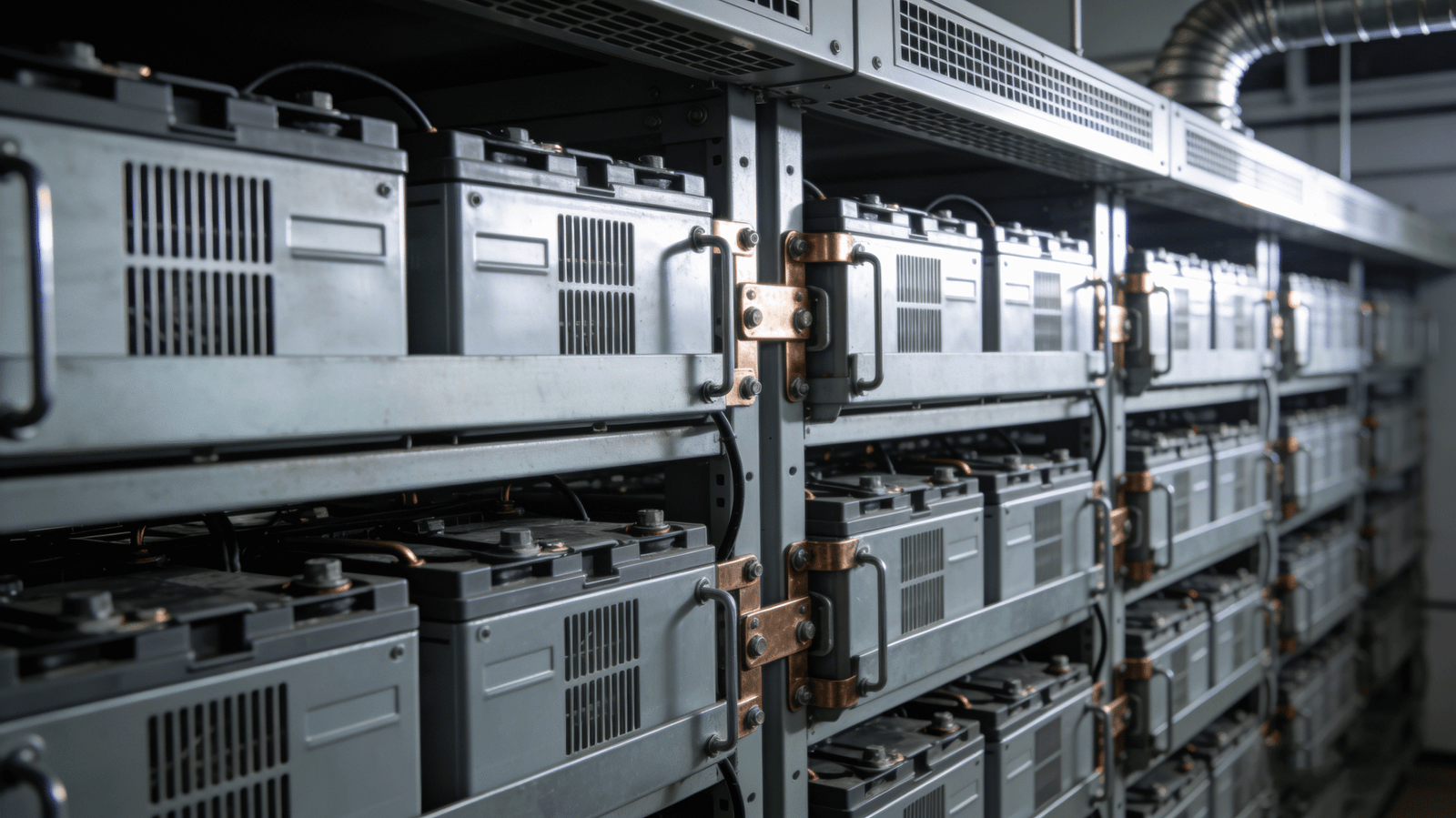
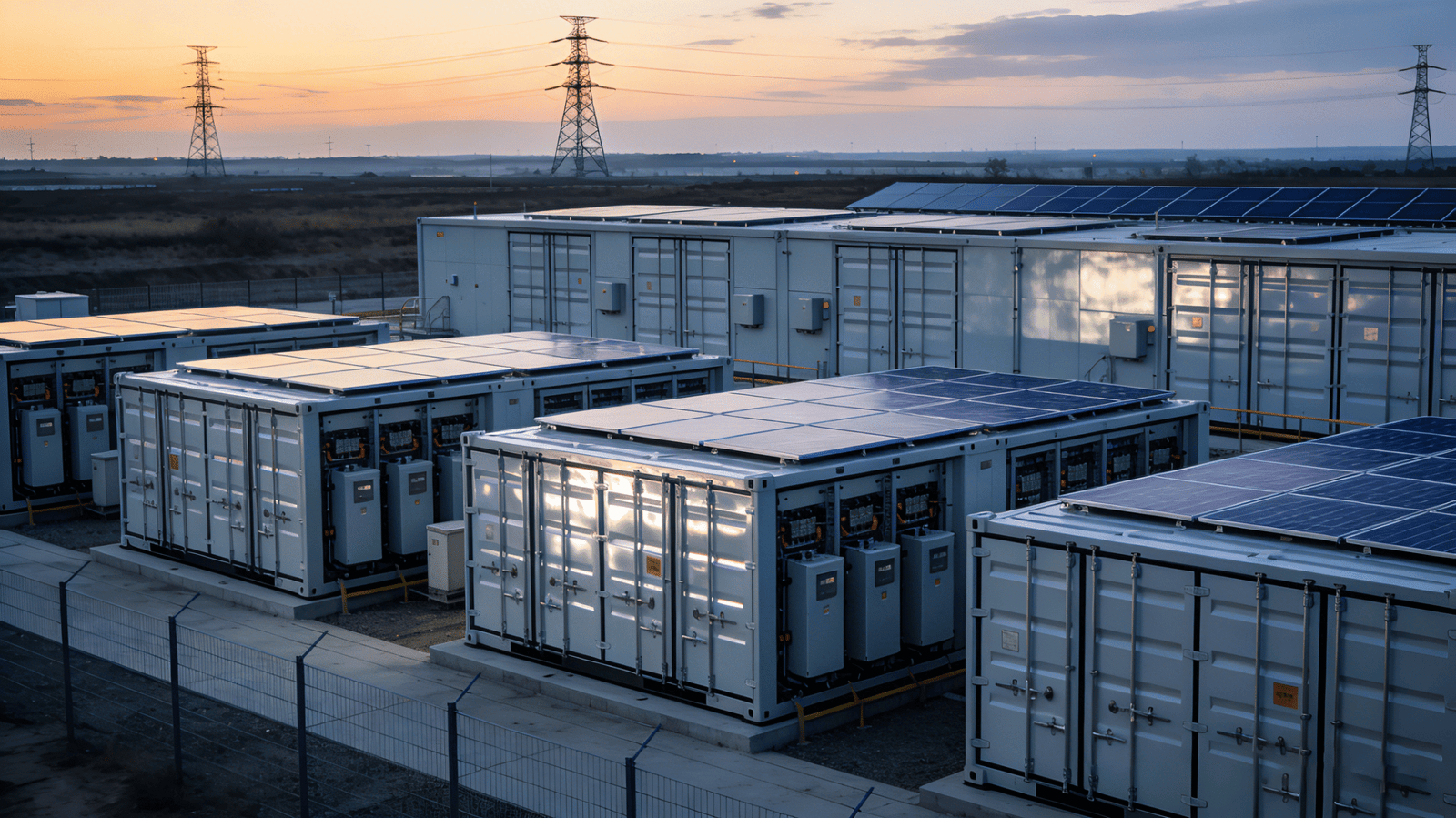
Simply put, commercial solar battery storage is a system where a business installs solar panels and connects them to batteries. The batteries store extra solar energy produced during the day. Then, the business can use that stored energy later — at night, on cloudy days, or during expensive peak hours.
“Instead of sending extra solar power back to the grid for little reward, smart businesses store it on-site and use it exactly when they need it most.”
— LongKun Battery Group, Shenzhen
In the past, solar panels alone had one big problem: the sun only shines part of the day. Without storage, unused solar energy is simply lost. However, with a battery system in place, businesses can capture every bit of solar power and put it to work around the clock.
This is different from a home energy storage system, which is sized for a single household. Commercial systems, on the other hand, are much larger and more powerful. They are designed to meet the heavy energy demands of businesses, factories, and large commercial buildings.
How Does Commercial Solar Battery Storage Work?
Understanding how the system works helps businesses make smarter buying decisions. So let us break it down into two simple parts.
Solar Panels + Batteries Working Together
Solar panels capture sunlight and turn it into electricity. However, they often produce more power than the business needs at that exact moment. Without batteries, that extra power either goes to waste or gets exported to the grid at a low price. With batteries connected, all of that extra energy is stored safely on-site instead.
The battery system also connects to the main power grid. Therefore, the business always has three sources of power available: solar panels, stored battery energy, and the grid as a backup. A smart energy management system controls which source to use and when.
Charging, Storing, and Discharging — Step by Step
Solar Panels Generate Power
During daylight hours, solar panels on the roof or land produce clean electricity for the building.
Batteries Charge Up
When solar production is greater than current demand, the extra power flows into the battery storage system and charges it up.
Smart Controller Manages Energy
A Battery Management System (BMS) monitors battery health, controls charge/discharge cycles, and protects the system from overcharging or overheating.
Stored Energy Is Used When Needed
At night, during peak tariff windows, or during a grid outage, the batteries discharge their stored energy to power the business — at no extra cost.
Grid Fills Any Remaining Gap
If solar and battery power are not enough, the grid provides backup electricity. This ensures zero interruption to business operations.
How Big Is the Commercial Solar Battery Storage Market?
The commercial solar battery storage market is one of the fastest-growing energy sectors in the world right now. As a result, businesses and investors alike are paying close attention to it.
Furthermore, the commercial and industrial (C&I) segment is leading this growth. According to GM Insights market research, this segment alone is expected to surpass USD 45 billion by 2034. That clearly shows that businesses around the world are already making the switch.
In Europe specifically, new battery energy storage installations reached 27.1 GWh in 2025 — marking the 12th straight year of record growth. This trend is accelerating in the USA, Australia, Japan, and other developed markets as well.
Rising electricity prices, falling battery costs, government incentives, and net-zero targets are all pushing businesses toward solar-plus-storage at the same time. The opportunity is very large and it is only getting bigger.
Key Benefits of Commercial Solar Battery Storage for Businesses
Adding battery storage to a commercial solar system brings many powerful benefits. Here are the three most important ones for any business owner or facility manager.
Cut Energy Costs With Peak Shaving and Load Shifting
One of the biggest wins for businesses is lower electricity bills. Here is how it works:
- Peak shaving: Batteries discharge during high-demand periods. This reduces the peak demand on the grid connection, which directly lowers demand charges — often the largest part of a commercial electricity bill.
- Load shifting: Stored energy is used during expensive time-of-use windows. As a result, the business buys less grid power at premium rates.
- Self-consumption: More solar energy is used on-site instead of being exported at a low feed-in tariff rate.
“Commercial facilities using solar-plus-storage have cut peak energy costs by nearly 30% through peak shaving and load shifting strategies.”
— Industry case studies via SRNESolar
This benefit is especially strong for energy-intensive businesses. Sites like manufacturing plants, cold storage facilities, and large warehouses often face very high demand charges. Therefore, peak shaving alone can deliver massive savings for those operations.
Backup Power and Business Continuity
Grid outages can be very costly for businesses. A single hour of downtime in a data center or a factory can cost thousands or even millions of dollars. Fortunately, commercial solar battery storage solves this problem directly.
When the grid goes down, the battery system automatically kicks in. Moreover, it keeps critical loads running without any interruption. This can even partially replace diesel generators, giving businesses a cleaner and quieter backup option.
| Business Type | Risk Without Backup Power | Benefit of Battery Storage |
|---|---|---|
| Data Centers | Data loss, service outages, contract penalties | Seamless power continuity for servers and cooling |
| Cold Storage / Food | Spoiled inventory, health violations, losses | Maintains temperature control during outages |
| Manufacturing Plants | Production line stoppages, equipment damage | Keeps critical machinery and safety systems running |
| Hospitals / Clinics | Life-safety risks, regulatory non-compliance | Clean, instant backup for critical medical systems |
| Retail / Hospitality | Lost sales, customer dissatisfaction | Maintains lighting, POS systems, and HVAC |
Supporting Net-Zero and ESG Goals
Today, many large companies have made public pledges to reach net-zero carbon emissions. Additionally, investors and customers are increasingly checking a company’s environmental, social, and governance (ESG) performance. Commercial solar battery storage helps businesses on both fronts.
- It increases on-site use of clean solar energy, which reduces carbon emissions directly.
- It reduces grid imports during peak hours, when grid electricity is often dirtier and more carbon-intensive.
- It supports sustainability reporting and ESG credentials, which can attract better investors and customers.
What Types of Businesses Benefit Most?
Not every business benefits equally. However, certain types of facilities are especially well-suited for commercial solar battery storage.
Businesses with high or spiky electricity loads benefit the most — especially those paying large demand charges or facing serious risks from grid outages.
- Manufacturing plants: High energy loads and high demand charges make storage very profitable for manufacturers.
- Cold storage and food processing: Temperature-sensitive operations must maintain power at all times, making backup storage essential.
- Warehouses and logistics centers: Large roof areas for solar panels and consistent energy loads make these ideal candidates.
- Data centers: Critical uptime requirements and massive energy bills make solar-plus-storage both a financial and operational necessity.
- Large retail and shopping centers: High HVAC loads and customer-facing operations benefit greatly from cost reduction and backup power.
- Telecom base stations: Remote sites with grid reliability issues need stable, long-lasting battery backup systems.
- Hotels and hospitality: Guest comfort depends on uninterrupted power, and energy costs are a major operating expense.
Furthermore, businesses pursuing net-zero energy targets or building certifications like LEED also gain strategic value from storage — beyond just the financial savings.
What Size System Does Your Business Need?
One of the first questions businesses ask is: “How big a system do I need?” The answer depends on several factors, including your current energy usage, your peak demand, and your main goal — whether that is cost savings, backup power, or both.
| System Size | Typical User | Common Applications | Market Outlook |
|---|---|---|---|
| 51–250 kW | Small to mid-size commercial buildings, small businesses, community solar | Retail, offices, clinics, small factories | Projected to exceed USD 35B by 2034 |
| 251–500 kW | Energy-intensive industries | Warehouses, manufacturing, cold storage | Held ~14% market share in 2024 |
| 500 kW+ | Large industrial and utility-adjacent users | Large data centers, ports, campuses | Fastest growing by capacity |
As a general rule, a good starting point for sizing a commercial system is to look at your last 12 months of electricity bills. Pay special attention to your peak demand readings and any demand charges you are already paying. These numbers reveal how much storage capacity you actually need.
A qualified energy storage engineer will analyse your load profile — meaning your hourly energy use pattern throughout the day and year. This analysis is the most reliable way to size a commercial solar battery system correctly. Always ask for a site-specific financial model before committing.
What Types of Batteries Are Used in Commercial Solar Storage?
Not all batteries are created equal. Choosing the right battery chemistry is one of the most important decisions in a commercial solar storage project. So, let us look at what the market currently favours.
Why LiFePO4 (Lithium Iron Phosphate) Dominates
Today, LiFePO4 — also written as lithium iron phosphate — is the leading battery technology for commercial solar storage. It dominates the market for very good reasons:
- Extremely long cycle life: Up to 8,000 charge-discharge cycles, compared to 500–1,000 for lead-acid batteries.
- High energy density: More energy packed into a smaller space, which saves floor space in your facility.
- Superior safety: LiFePO4 chemistry is thermally stable and much less prone to overheating or fire than older lithium-ion types.
- Wide temperature tolerance: Performs reliably in a wide range of operating environments.
- Low maintenance: Unlike lead-acid systems, LiFePO4 batteries need very little maintenance over their lifespan.
Voltage: 3.2V | Capacity: 304Ah | Cycle Life: Up to ~8,000 cycles | Certifications: UN38.3, CE, RoHS, UL | Application: Solar energy storage systems, industrial use
At LongKun Battery Group, we use only Tier-1 brand cells in our battery packs. Furthermore, our engineers — many of whom come from industry leaders like BYD and CATL — ensure that every pack meets the highest quality standards. You can explore our industrial energy storage solutions to see the full range of available options.
Comparing Battery Technologies for Commercial Use
| Battery Type | Cycle Life | Safety | Cost | Best For |
|---|---|---|---|---|
| LiFePO4 | 6,000–8,000+ | ⭐⭐⭐⭐⭐ Excellent | Medium-High upfront, low lifetime | Commercial solar, industrial ESS |
| NMC Lithium-Ion | 2,000–4,000 | ⭐⭐⭐⭐ Good | Medium | High-density applications |
| Lead-Acid | 500–1,000 | ⭐⭐⭐ Moderate | Low upfront, high lifetime | Very small/legacy installs |
| Flow Battery | 10,000+ | ⭐⭐⭐⭐⭐ Very High | Very High upfront | Large utility-scale storage |
ROI, Payback Period, and Financing Options
One of the most common questions from business owners is: “Will I actually get my money back?” The honest answer is: in most cases, yes — and often faster than expected.
Typical Payback Periods
According to industry case studies from Sol-Ark, when a commercial storage system is used for both peak shaving and time-of-use arbitrage in high-tariff regions, payback periods can often fall into the mid-single-digit range of years. In simpler terms, many businesses recover their investment within 5 to 8 years, while the batteries themselves last 15–20 years or more.
- Local electricity tariff rates and demand charge structure
- Available government incentives, tax credits, or rebates
- Your facility’s load profile (how and when you use energy)
- System size and battery chemistry chosen
- Whether you are also installing solar or adding storage to existing panels
Financing Options to Consider
- Outright purchase: Best long-term ROI; full ownership from day one.
- Equipment financing / loans: Spread the cost over several years while savings offset repayments.
- Power Purchase Agreements (PPAs): A third party installs and owns the system; you buy the energy at a fixed, lower rate.
- Leasing: Lower upfront cost, though you do not own the asset.
- Government grants and incentives: Many countries in Europe, the USA, and Australia offer financial support for commercial solar-plus-storage projects. Always check local schemes before signing a contract.
For more detail on financing options available in your region, the U.S. Department of Energy’s solar finance guide is a solid starting point. Businesses in Europe can also refer to SolarPower Europe for regional support information.
Safety, Certifications, and Standards to Know
When choosing a commercial solar battery storage system, safety and compliance are non-negotiable. A battery system that does not meet international standards can be dangerous, void insurance policies, and may not be permitted for installation in many markets.
Here are the key certifications and standards you should always look for:
| Standard / Cert | What It Means | Why It Matters |
|---|---|---|
| UN38.3 | International standard for safe transport of lithium batteries | Required for shipping batteries internationally |
| CE | European conformity marking | Mandatory for sale in EU and EEA markets |
| UL | Underwriters Laboratories certification | Required or strongly preferred in the USA and Canada |
| UKCA | UK Conformity Assessed (post-Brexit CE equivalent) | Required for sale in Great Britain |
| RoHS | Restriction of Hazardous Substances | Confirms the product is free from dangerous materials |
| IEC | International Electrotechnical Commission standards | Global baseline for electrical safety and performance |
All LongKun battery packs and cells carry UN38.3, MSDS, IEC, CE, UKCA, RoHS, and UL certifications. Our systems have also successfully passed audits by globally recognized brands. When you choose LongKun, your compliance requirements are already covered.
Why Choose LongKun for Commercial Solar Battery Storage?
There are many battery suppliers in the market. So why do businesses across Europe, the USA, Australia, and Japan consistently choose LongKun Battery Group? Here is a straightforward answer.
- 15+ Years of Manufacturing Experience: Founded in Shenzhen in 2009, LongKun has over 15 years of expertise in custom lithium battery pack manufacturing. That means we have already solved the problems that newer suppliers are still learning about.
- Industry 4.0 Factory: Our 5 fully automated production lines meet Industry 4.0 standards, ensuring consistent quality across every single unit produced.
- World-Class Engineering Team: Our team includes 50+ experienced engineers, many of whom have previously worked at BYD and CATL — two of the world’s leading battery companies.
- Tier-1 Cells Only: We only use top-tier brand cells in our battery packs, which is why our batteries deliver high energy density, fast charge capability, and long service life.
- Fully Certified: UN38.3, CE, UKCA, UL, RoHS, IEC, MSDS — all boxes checked for your target markets.
- Complete Custom Solutions: From Battery Structure Design to BMS customization, Battery Pack assembly, and Battery Charger development — we offer a true one-stop service.
- Scale and Capacity: With 1,000 skilled workers and an annual output of over 50 million units, we can scale to meet any project size.
- Proven Track Record: Over 1,500 satisfied clients worldwide, including data center operators, telecom companies, aerospace firms, and commercial building developers.
Real-World Case Studies
A multinational corporation chose LongKun to supply battery packs for their data center backup systems. Our high-capacity, long-lasting packs kept the data centers running during power outages — protecting critical business operations around the clock.
A major telecom company needed reliable power for extensive base station operations. LongKun designed a high-performance battery pack with high energy density and excellent resistance to harsh environments, greatly reducing the risk of communication interruption.
An aerospace company selected LongKun to develop a specialized battery pack for satellite systems. Our team engineered a pack that withstands extreme temperatures and radiation — delivering reliable performance in some of the harshest conditions imaginable.
Ready to explore the right solution for your business? Visit our Industrial Energy Storage System page or our Home Energy Storage System page to find the best starting point.
Frequently Asked Questions About Commercial Solar Battery Storage
Conclusion
Commercial solar battery storage is no longer just a future technology. Today, it is a proven, cost-effective solution that thousands of businesses worldwide are already using to cut energy bills, improve resilience, and hit sustainability targets.
The numbers speak for themselves. With a global market heading toward USD 378.5 billion by 2034, peak cost reductions of up to 30%, and battery technology that lasts 8,000+ cycles, the business case for commercial solar storage has never been stronger. The question is no longer whether to adopt it, but when — and who you choose to partner with.
Choosing the right battery supplier is one of the most important decisions in any solar storage project. You need a partner with proven technology, proper certifications, deep engineering expertise, and the capacity to deliver at scale. That is exactly what LongKun Battery Group brings to every project.
Ready to Cut Your Energy Bills With Commercial Solar Battery Storage?
LongKun Battery Group has helped over 1,500 businesses worldwide with custom, certified, high-performance battery solutions. Let our expert team design the right commercial solar storage system for your facility — with no obligation.
📎 External Links Referenced in This Article:
(1) GM Insights — Solar Energy Storage Market |
(2) SRNESolar — Commercial Storage Case Study |
(3) Sol-Ark — ROI & Payback Period Data |
(4) SolarPower Europe — EU BESS Market Review 2025 |
(5) U.S. DOE — Solar Energy Finance Guide |
(6) SolarPower Europe — Incentives & Policy