Key Takeaways at a Glance
📋 Table of Contents
- 1.What Is a Peak Shaving Battery System?
- 2.Peak Shaving vs. Load Shifting vs. Backup Power
- 3.How a Peak Shaving Battery System Works (Step-by-Step)
- 4.How Much Can You Save? Real Data & Case Studies
- 5.Global Market Growth for Peak Shaving Battery Systems
- 6.Key Components of a Peak Shaving Battery Solution
- 7.How to Size a Peak Shaving Battery System for Your Facility
- 8.LongKun Peak Shaving Battery Products
- 9.Top Industries & Use Cases for Peak Shaving Battery Systems
- 10.Combining Solar PV with Peak Shaving Batteries
- 11.How LongKun (clkbattery.com) Supports Peak Shaving Projects
- 12.Frequently Asked Questions (FAQ)
- 13.Conclusion: Is a Peak Shaving Battery System Right for You?
What Is a Peak Shaving Battery System?
A peak shaving battery system is a battery energy storage system (BESS) that helps you control how much power you draw from the grid. First, the battery charges up when electricity is cheap or demand is low. Then, it discharges during high-demand periods. This keeps your grid power draw below a set limit, which significantly reduces your energy bill.
“A peak shaving battery system is like a financial buffer for your electricity. It absorbs the expensive spikes so you never pay full price for peak power.”
— LongKun Battery Group Engineering Team
To understand why this matters, you first need to know about peak demand. Peak demand is the highest amount of power your building or facility pulls from the grid at any single moment. Utilities track this number carefully. They often charge a separate fee called a demand charge — based on that highest peak reading of the month.
Therefore, even if you only hit a high peak for 15 minutes in an entire month, you could still pay a large demand charge for the whole month. A peak shaving system helps you avoid that spike entirely.
Understanding Demand Charges vs. Energy Charges
Your electricity bill usually has two main parts:
- Energy charge (kWh): You pay for the total amount of electricity you use.
- Demand charge (kW): You pay based on the highest rate at which you used power during a billing period.
For many commercial and industrial customers, demand charges can make up 30–70% of the total electricity bill. Consequently, reducing that peak demand number — even by a small amount — can lead to very large savings.
Peak Shaving vs. Load Shifting vs. Backup Power
These three terms are often confused. However, they each mean something different. Let’s break them down simply.
⚡ Peak Shaving
Reduces the height of short power spikes. The battery fires when your load hits a set limit. The main goal is cutting demand charges.
🔄 Load Shifting
Moves energy use from expensive time periods to cheaper ones. For example, charge the battery at night (cheap rate) and use it during the day (expensive rate).
🛡️ Backup Power
Keeps your facility running during a grid outage. The battery replaces grid power entirely when there is a blackout.
🌐 Grid Services
Your battery helps stabilize the wider grid. It can provide frequency regulation or other services, often while also doing peak shaving.
💡 Pro Tip: In practice, many modern systems do peak shaving and load shifting at the same time. Smart energy management software handles both automatically. This is the most cost-effective approach for most businesses.
How a Peak Shaving Battery System Works (Step-by-Step)
The process is actually straightforward. Here is exactly how a peak shaving battery system works in a real facility:
- Smart meters monitor your power demand in real time. The energy management system (EMS) watches your load 24/7 and tracks every spike and dip.
- The battery charges during low-demand or low-tariff periods. This is often at night, during weekends, or whenever solar PV produces surplus power.
- The EMS detects an approaching peak. When your demand is about to cross a preset import limit, the system sends a signal to the battery.
- The battery discharges automatically. It releases stored energy into your facility. As a result, your grid draw stays below the set limit.
- The peak is “shaved” off your load profile. Your meter records a lower peak demand. Therefore, your demand charge at the end of the month is much lower.
- The battery recharges for the next cycle. The system resets and is always ready for the next peak event.
Common Control Strategies Used Today
Modern inverters and EMS platforms commonly use three main strategies:
- Time-of-Use (TOU) + Peak Shaving: The battery charges at cheap off-peak times and discharges both during price peaks and demand spikes.
- Self-Consumption + Peak Shaving: Solar PV covers your base load first. Then the battery handles any remaining peaks. This is a very popular combination.
- Import-Limit Control: A fixed ceiling is set. The battery fires any time your grid import tries to exceed that ceiling, regardless of time of day.
How Much Can You Save? Real Data & Case Studies
This is the question that matters most. Let’s look at real-world numbers from actual studies and projects around the world.
| Scenario / Study | Reported Saving / Impact |
|---|---|
| Industrial loads with BESS peak shaving | Shorter payback periods observed in multiple industrial case studies |
| Malaysian food factory with solar PV + BESS | 6.9% energy cost cut; 8.6% CO₂ reduction |
| Joint peak shaving + frequency regulation | Up to ~12% electricity bill saving |
| High-tariff residential solar + battery users | Up to ~60–85% bill reduction (case-based results) |
Furthermore, combining peak shaving with other services — such as frequency regulation (U.S. Department of Energy) — can significantly boost your return on investment. Studies show that using a battery for a single purpose like peak shaving alone is less profitable than combining it with complementary grid services.
“The net profit from batteries used jointly for peak shaving and frequency regulation is significantly higher than using them for a single application alone.”
— Energy Research, ar5iv/arxiv
What Affects Your Payback Period?
- Your local demand charge rate (higher = faster payback)
- How many peak events happen each month
- Whether you combine peak shaving with solar PV generation
- Battery system size and upfront cost
- Whether you access grid services or incentive programs
Global Market Growth for Peak Shaving Battery Systems
The global market for peak shaving battery systems is growing at an impressive pace. This rapid growth is being driven by rising energy costs, grid congestion, and the explosion of EV charging infrastructure worldwide. Here is the latest market data:
| Market Segment | 2024 Size (USD) | 2032/2033 Projection | CAGR |
|---|---|---|---|
| BESS peak shaving for MHE (warehouse/forklift) charging | $1.2 billion | $4.8 billion | ~16.7% |
| BESS for peak shaving at EV chargers | $1.83 billion | $14.85 billion | ~27.4% |
| Battery buffer for peak shaving pumps | $1.94 billion | $4.72 billion | ~10.3% |
| Overall battery storage systems (all uses) | $11.01 billion | $41.6 billion (2032) | ~18–19% |
Notably, BESS for EV charger peak shaving is the fastest-growing segment at a 27.4% CAGR. This reflects the massive global investment in EV infrastructure. Additionally, the wider battery storage market is set to nearly quadruple in size by 2032, reaching $41.6 billion. For more details on global trends, see the IEA Batteries and Secure Energy Transitions report.
Key Components of a Peak Shaving Battery Solution
A complete peak shaving battery system is not just a battery. Instead, it is a carefully integrated set of hardware and software components that work together. Here are the main parts you need:
Battery Pack (BESS)
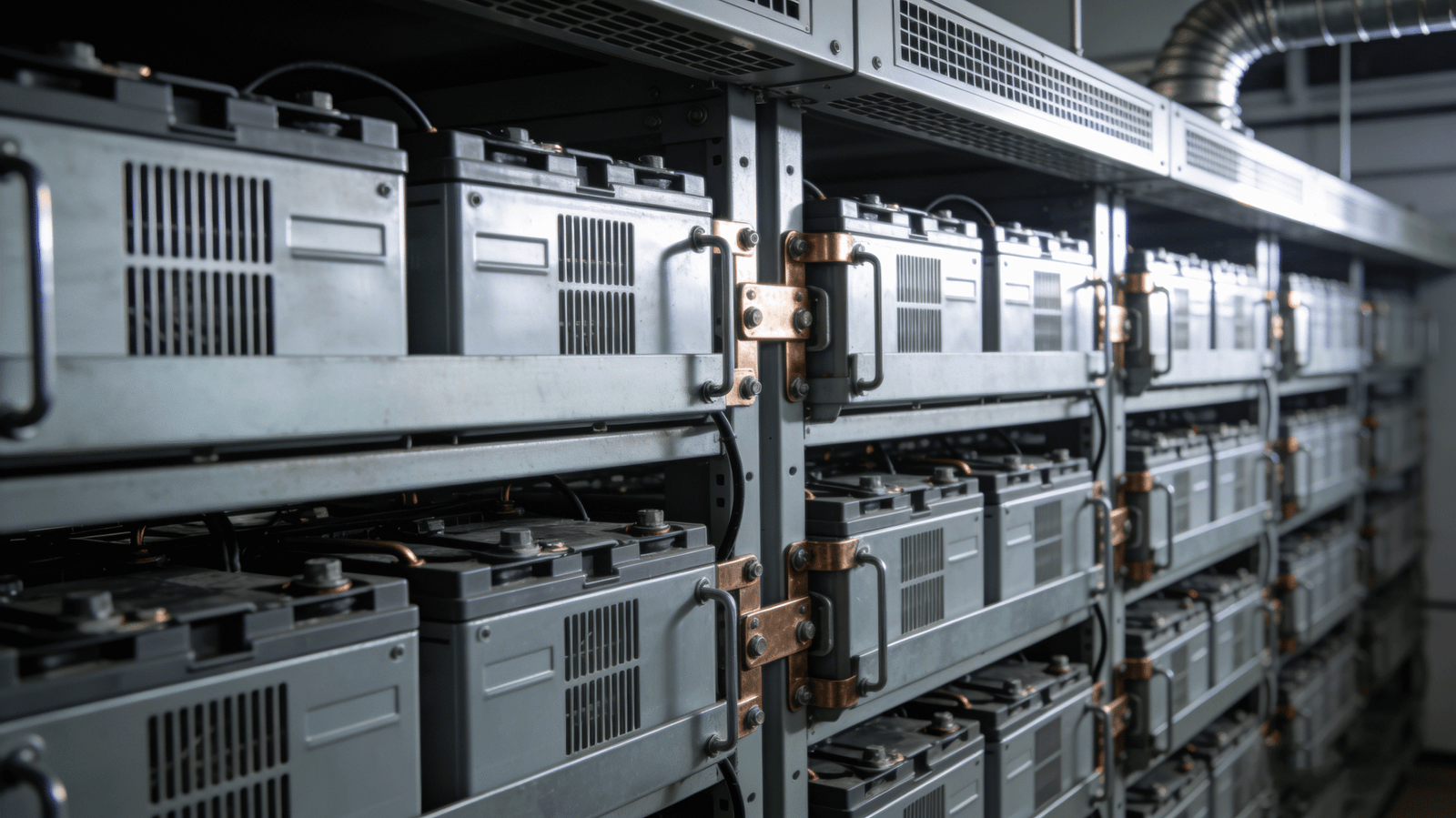
Usually lithium-ion (LFP chemistry is most common for stationary storage). Stores and releases energy on demand.
Inverter / PCS
Power Conversion System converts DC battery power to AC grid power (and back). Controls charge/discharge speed.
EMS (Energy Management System)
The brain of the system. It monitors your load, forecasts peaks, and sends commands to the battery automatically.
Smart Metering
Real-time power measurement at the grid connection point. Feeds data into the EMS for accurate peak detection.
BMS (Battery Management System)
Protects the battery cells. Monitors temperature, voltage, and current for safe and long-lasting operation.
PV Integration (optional)
Connecting solar panels to your BESS boosts savings further. Solar charges the battery for free during the day.
💡 Advanced systems also allow batteries to provide additional grid services (like frequency regulation or backup power) when they are not actively shaving peaks. This improves battery utilization and boosts ROI significantly.
How to Size a Peak Shaving Battery System for Your Facility
Sizing is one of the most important steps. Getting the size right means you save the most money without overpaying for battery capacity. Here is a simple step-by-step guide to sizing:
- Analyze your daily load profile. Gather at least 12 months of 15-minute interval energy data. Identify when your peaks happen and how long they last.
- Set your target peak reduction (kW). Decide how much you want to cut your peak demand. For example, if your peak is 500 kW and you want to reduce it to 350 kW, your target reduction is 150 kW.
- Calculate required battery power (kW). The battery needs to discharge at least at your target peak reduction level. So in the example above, you need at least 150 kW of discharge power.
- Calculate required energy capacity (kWh). Multiply the required power (kW) by the expected peak duration (hours). If your peak lasts 2 hours: 150 kW × 2 hours = 300 kWh minimum capacity.
- Factor in battery utilization. Research shows that with a battery sized at 10× the mean power, 75% of users achieve peak reduction below 44% and the battery may sit idle ≥80% of the time. Therefore, combining peak shaving with other services is often the smarter economic choice.
- Get a professional site survey and ROI calculation. Local grid tariffs, incentives, and your specific load profile all affect the final system size and payback period.
⚠️ Important: Oversizing your battery wastes money on upfront capital. Undersizing means you miss peak shaving opportunities. Always base sizing decisions on real interval meter data, not estimates.
Quick Sizing Reference
| Target Peak Reduction | Peak Duration | Minimum Battery Size Needed |
|---|---|---|
| 50 kW | 1 hour | 50 kWh / 50 kW |
| 100 kW | 2 hours | 200 kWh / 100 kW |
| 250 kW | 2 hours | 500 kWh / 250 kW |
| 500 kW | 3 hours | 1,500 kWh / 500 kW |
LongKun Peak Shaving Battery Products
At LongKun Battery Group, we offer purpose-built energy storage solutions for commercial and industrial peak shaving projects. Below are our two flagship product lines for this application:
Commercial Solar Battery Storage System by LongKun
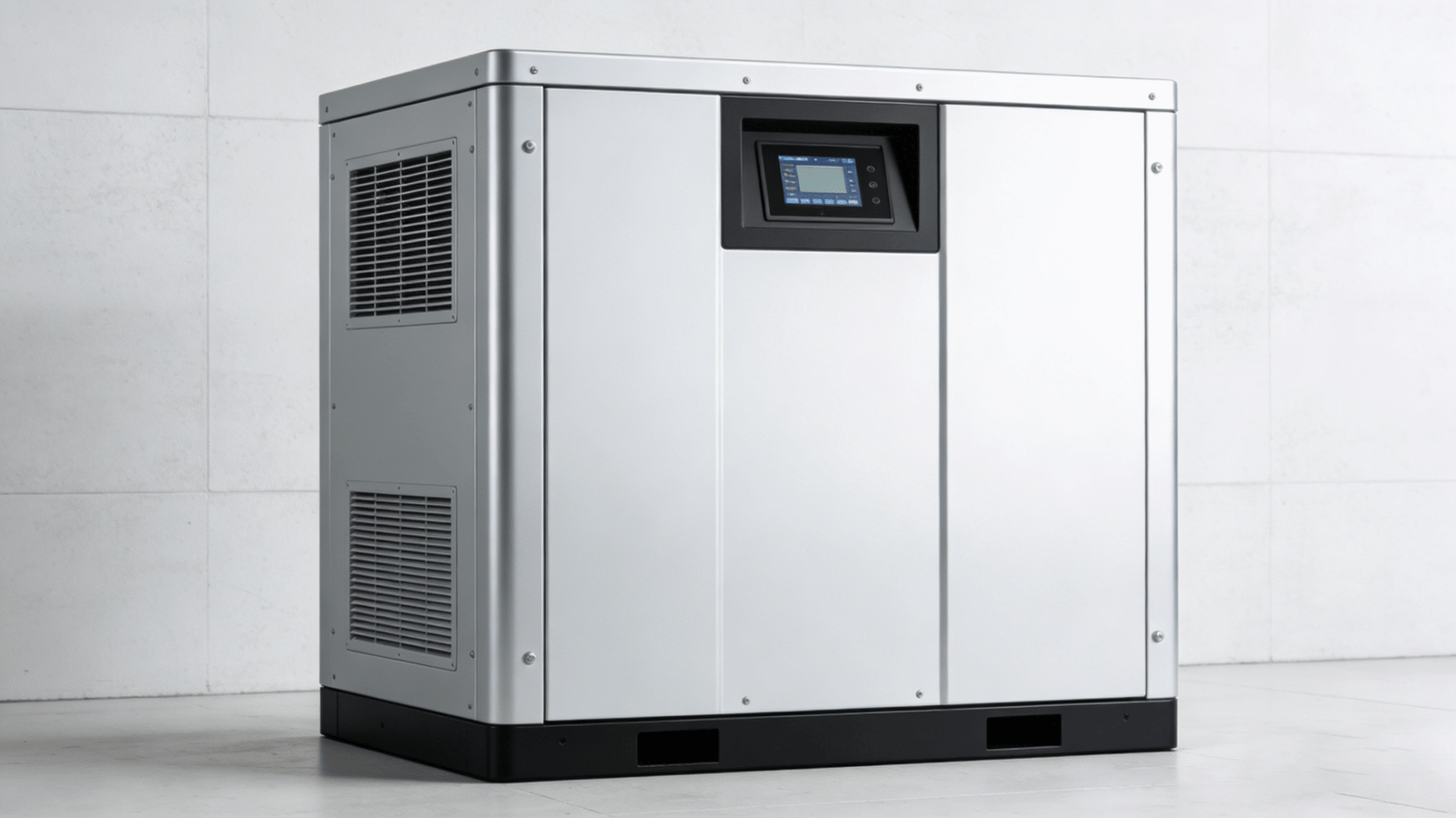
Ideal for factories, office buildings, and retail facilities. This system integrates solar PV with smart peak shaving BESS to reduce demand charges and energy costs simultaneously. Features high energy density LFP cells, smart BMS, and remote monitoring via EMS.
View Product Details →
Container Energy Storage System by LongKun
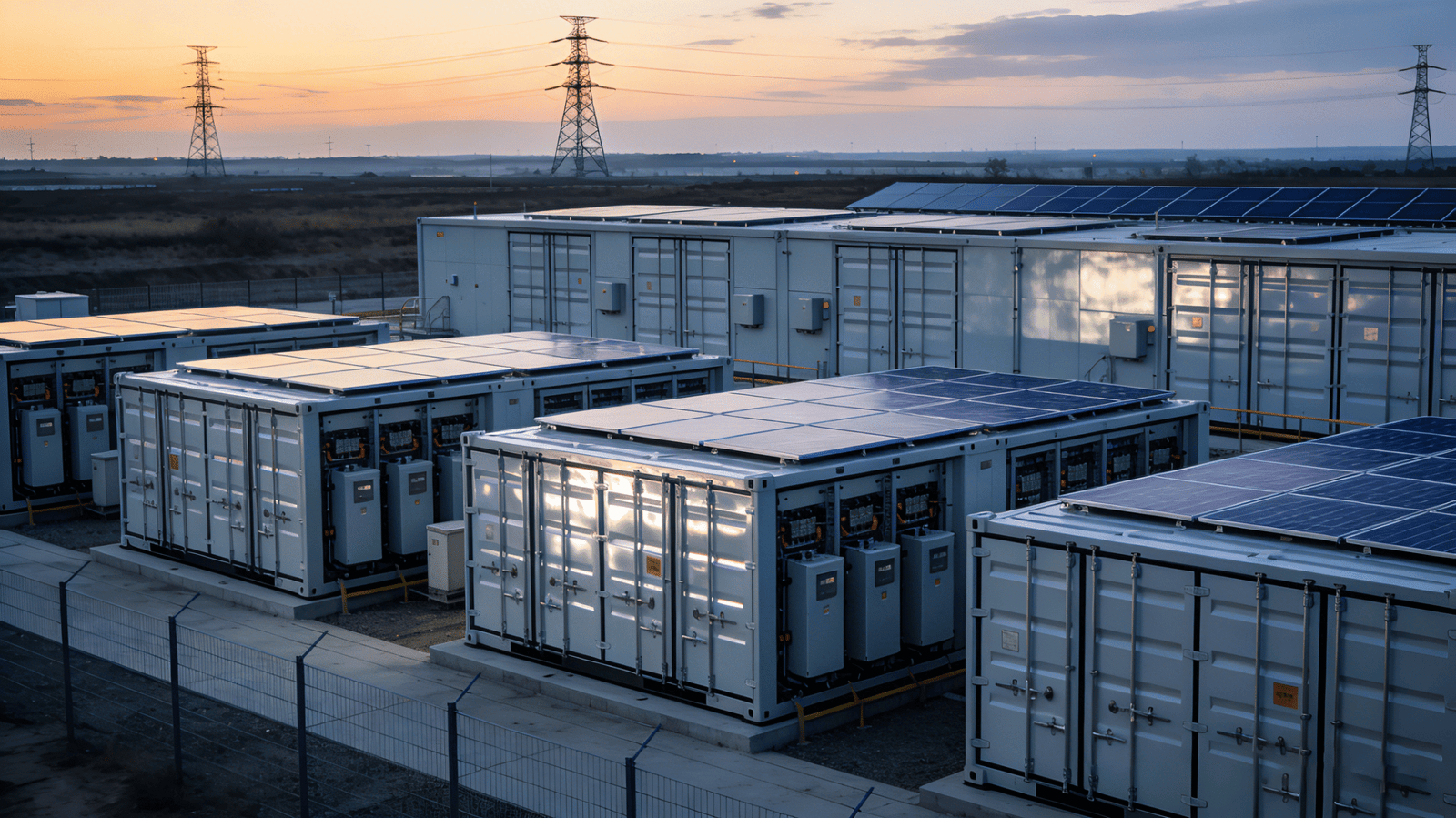
Our containerized BESS is engineered for large-scale industrial peak shaving, EV charging hubs, and grid-side applications. Fully pre-assembled, pre-tested, and ready to deploy. Supports capacities from hundreds of kWh to multi-MWh configurations.
View Product Details →
Top Industries & Use Cases for Peak Shaving Battery Systems
A wide range of industries can benefit from peak shaving. Moreover, as energy prices rise globally, this technology is spreading beyond large factories into smaller and mid-sized businesses as well.
Manufacturing & Factories
Large, variable loads with frequent demand spikes. BESS directly cuts demand charges on heavy production days.
Warehouses & Logistics
BESS peak shaving for MHE (forklifts, AGVs) charging is one of the fastest-growing segments. E-commerce growth is driving demand.
EV Charging Stations
Fast chargers cause huge short-term spikes. BESS stores energy off-peak and discharges during fast-charging events, avoiding costly grid upgrades.
Commercial Buildings
Office towers, shopping centers, and hotels benefit from combining peak shaving with solar rooftop to cut both demand and energy charges.
Water Utilities & Pumps
Battery buffer systems sized for large pumps reduce demand peaks at water treatment plants and pumping stations.
Data Centers
Critical, always-on loads. BESS provides both peak shaving and backup, a dual benefit that dramatically reduces total energy cost and risk.
Cold Storage
Refrigeration systems pull massive power during compressor start-up. BESS smooths these spikes and reduces monthly demand charges effectively.
AGV / AMR Robotics
Automated warehouses with robot fleets need frequent, simultaneous charging. BESS manages the charging demand intelligently to prevent peaks.
According to market research, industries with large variable loads and high demand charges benefit most from peak shaving batteries. Regions leading adoption include North America, Europe, and Asia-Pacific, where high energy prices and supportive policies create the strongest business case. For policy context, see the IRENA Energy Storage resources.
Combining Solar PV with Peak Shaving Batteries
One of the most powerful combinations in energy management today is solar PV paired with a peak shaving battery system. When you add solar panels to a battery storage system, you unlock much greater savings. Here is why:
- Solar PV generates free electricity during the day. Any surplus that your facility does not use immediately charges the battery.
- The charged battery then discharges during afternoon and evening peaks — exactly when grid electricity is most expensive.
- As a result, you cut both your energy charges (kWh) and your demand charges (kW) at the same time.
- Additionally, you reduce your facility’s carbon footprint, which supports corporate sustainability goals.
Real-World Case Study: Malaysian Food Manufacturing Facility
A food manufacturing building in Malaysia combined solar PV with a BESS peak shaving strategy. The results were impressive:
| Result Metric | Improvement |
|---|---|
| Energy cost reduction | 6.9% annual saving |
| CO₂ emissions reduction | 8.6% annual reduction |
| System approach | Solar PV + BESS + demand management software |
This case study clearly shows that combining solar generation with battery storage and peak shaving control is a proven, real-world strategy. Furthermore, as solar panel costs continue to fall, the combined ROI of solar + BESS peak shaving systems keeps improving. To explore solar storage integration options for your business, visit our Commercial Solar Battery Storage page.
💡 Did you know? The synergy between solar PV and peak shaving batteries means your battery does more work per day. It charges from solar during daylight hours and discharges during evening peaks. This higher utilization rate improves your overall system economics significantly.
How LongKun (clkbattery.com) Supports Peak Shaving Projects
At LongKun Battery Group, we have been designing and manufacturing advanced battery solutions since 2009. We have helped clients across Europe, the USA, Australia, Japan, and many other markets achieve their energy goals. Our team includes engineers who have previously worked at BYD and CATL — two of the world’s leading battery companies.
Our Peak Shaving Product Range
- Commercial Solar Battery Storage: Designed for factories, office buildings, and mid-sized commercial facilities combining solar PV with peak shaving BESS.
- Container Energy Storage System: Pre-assembled, scalable containerized BESS for large industrial sites, EV charging hubs, and grid-side peak shaving at the MW scale.
What Makes LongKun Different?
- We use Tier 1 brand cells (top global suppliers) for maximum safety and reliability.
- Our smart BMS technology monitors every cell in real time to ensure safety, long cycle life, and optimized performance.
- We hold certifications including UN38.3, IEC, CE, UKCA, RoHS, and UL — accepted in all major export markets.
- Our factory runs 5 fully automated Industry 4.0 production lines with over 1,000 skilled workers and 50+ experienced engineers.
- We have served more than 1,500 satisfied clients across industries including aerospace, medical equipment, data centers, and energy storage.
Our Step-by-Step Project Support Process
- Step 1 — Site Survey: We review your facility layout, grid connection details, and any existing solar or backup systems.
- Step 2 — Bill Analysis: Our engineers analyze your electricity bills to identify demand charge patterns and peak events.
- Step 3 — System Sizing: We size the battery capacity (kWh) and power (kW) based on your actual load profile and peak reduction targets.
- Step 4 — ROI Calculation: We provide a detailed financial model showing expected savings, payback period, and net profit over the system lifetime.
- Step 5 — Deployment: Our team delivers, installs, and commissions the system. We handle all technical integration with your existing grid and solar setup.
- Step 6 — After-Sales Monitoring: We provide remote monitoring and ongoing support to ensure your system keeps performing at its best.
Whether you need a compact commercial unit or a large-scale containerized energy storage system, LongKun has the engineering expertise and manufacturing capacity to deliver. For further reading on BESS standards, see the NFPA 855 Standard for Energy Storage Systems.
Frequently Asked Questions (FAQ)
These are the most common questions people ask about peak shaving battery systems. We have answered each one clearly and simply.
+
A peak shaving battery system is a battery energy storage system (BESS) that charges when electricity is cheap or demand is low, then discharges during high-demand periods to keep grid power draw below a preset limit. This reduces demand charges, avoids costly grid upgrades, and smooths the load profile for both the facility and the grid.
+
Savings depend on your tariff structure and load profile. However, real-world data shows:
- Up to ~12% electricity bill reduction when batteries serve both peak shaving and frequency regulation.
- Around 6.9% energy cost reduction in a food manufacturing facility using solar PV + BESS.
- Up to 60–85% bill reduction in certain high-tariff residential cases with solar + battery systems.
+
Sizing starts from your target peak reduction (kW) and the duration of your daily peak (hours). For example, if you want to reduce a 150 kW spike that lasts 2 hours, you need at minimum a 150 kW / 300 kWh system. Research also shows that combining peak shaving with other services often makes more economic sense than oversizing the battery for peak shaving alone.
+
Studies focused on industrial applications show that peak shaving with batteries can shorten payback periods for large loads, especially where demand charges are significant. When combined with other revenue streams such as frequency regulation, net profit can be significantly higher than using batteries for peak shaving alone. Typical commercial payback periods range from 3 to 7 years depending on tariff levels and usage patterns.
+
Common applications include: warehouses and logistics centers (MHE and forklift charging), manufacturing facilities, commercial buildings, EV fast-charging stations, data centers, cold storage facilities, and large pump or water-treatment systems. In EV charging, BESS stores energy off-peak and discharges during fast-charging peaks, which can avoid costly grid upgrades and demand charges.
+
Peak shaving focuses on reducing the height of short-duration power demand spikes, mainly to cut demand charges. Load shifting, on the other hand, moves energy consumption from expensive time periods to cheaper ones, often using time-of-use tariffs and flexible processes. In practice, many modern battery systems do both simultaneously, which is the most cost-effective approach.
+
Absolutely. Integrating solar PV with BESS allows sites to store surplus solar during the day and discharge during peak demand or peak pricing hours. Real-world cases show this combination can deliver both electricity cost savings and significant CO₂ emissions reductions for industrial facilities. It is one of the most popular and cost-effective configurations today.
+
Industries with large, variable loads and high demand charges benefit most. These include logistics and warehousing, manufacturing, cold storage, data centers, EV charging networks, and water utilities. Regions with aggressive electrification, high energy prices, and supportive policy frameworks — such as North America, Europe, and Asia-Pacific — are currently leading adoption.
+
By discharging during system peaks, BESS reduces stress on the grid, lowers the risk of overloads, and can help prevent blackouts. When connected to grid services like frequency regulation, aggregated batteries across multiple sites can further improve overall grid stability and increase total available grid capacity.
+
Yes, especially for SMEs facing high demand charges, tight grid capacity, or those wanting to integrate rooftop solar. Modular commercial BESS solutions and falling battery costs are making peak shaving more accessible beyond very large industrial users. Many SMEs now achieve payback periods under 5 years with the right tariff structure and system design.
Conclusion: Is a Peak Shaving Battery System Right for You?
A peak shaving battery system is one of the most powerful tools available today to reduce commercial and industrial energy costs. The core idea is simple: store cheap energy, then use it to shave off expensive demand spikes. Yet the results — from real studies and real installations — are impressive.
Demand charges are often the biggest and most overlooked part of a business electricity bill. Furthermore, as electricity prices continue to rise worldwide and grids become more congested, the value of peak shaving will only increase. When combined with solar PV, load shifting, and grid services, a well-designed peak shaving BESS can transform your facility’s energy economics entirely.
The global market agrees: battery storage for peak shaving is growing at double-digit rates across every major segment — from EV charging to industrial warehouses to commercial buildings. Now is the right time to act.
LongKun Battery Group has the engineering expertise, manufacturing capability, and after-sales support to help you design and deploy the right system for your needs. With over 15 years of experience, Tier 1 cells, smart BMS technology, and full international certification, we are ready to partner with you from the first inquiry all the way through to long-term monitoring and support.
Ready to Start Saving on Your Energy Bill?
Get a free custom peak shaving assessment from LongKun Battery Group. Our engineers will analyze your load profile, size the right system, and deliver a clear ROI report — at no cost to you.